Buyers who search for an industrial waffle machine price usually want a number. The honest answer is that waffle lines range from compact lines for a startup to large, fully integrated systems that bake tens of thousands of waffles an hour, and no single figure fits both. What is useful is knowing which choices move the price and how to turn a quote into a payback estimate.
This guide covers both. It sets out the main cost drivers in a waffle line, shows how to compare quotes and gives you a method to calculate ROI with your own numbers.
Why a waffle line is priced by configuration
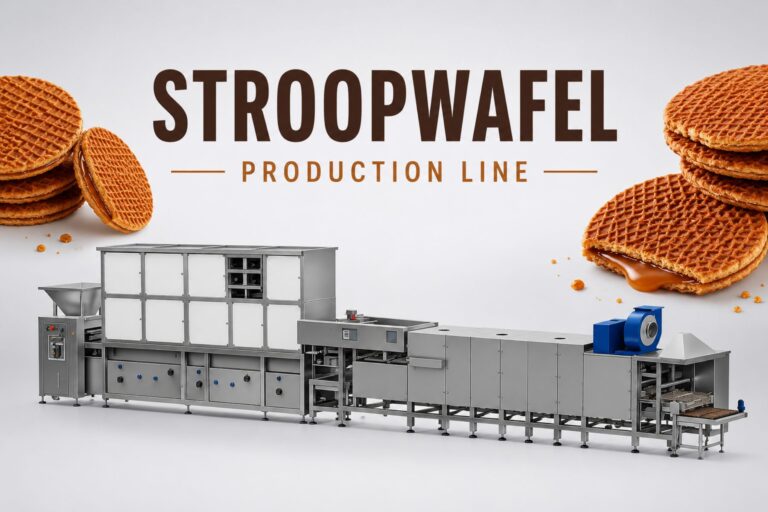
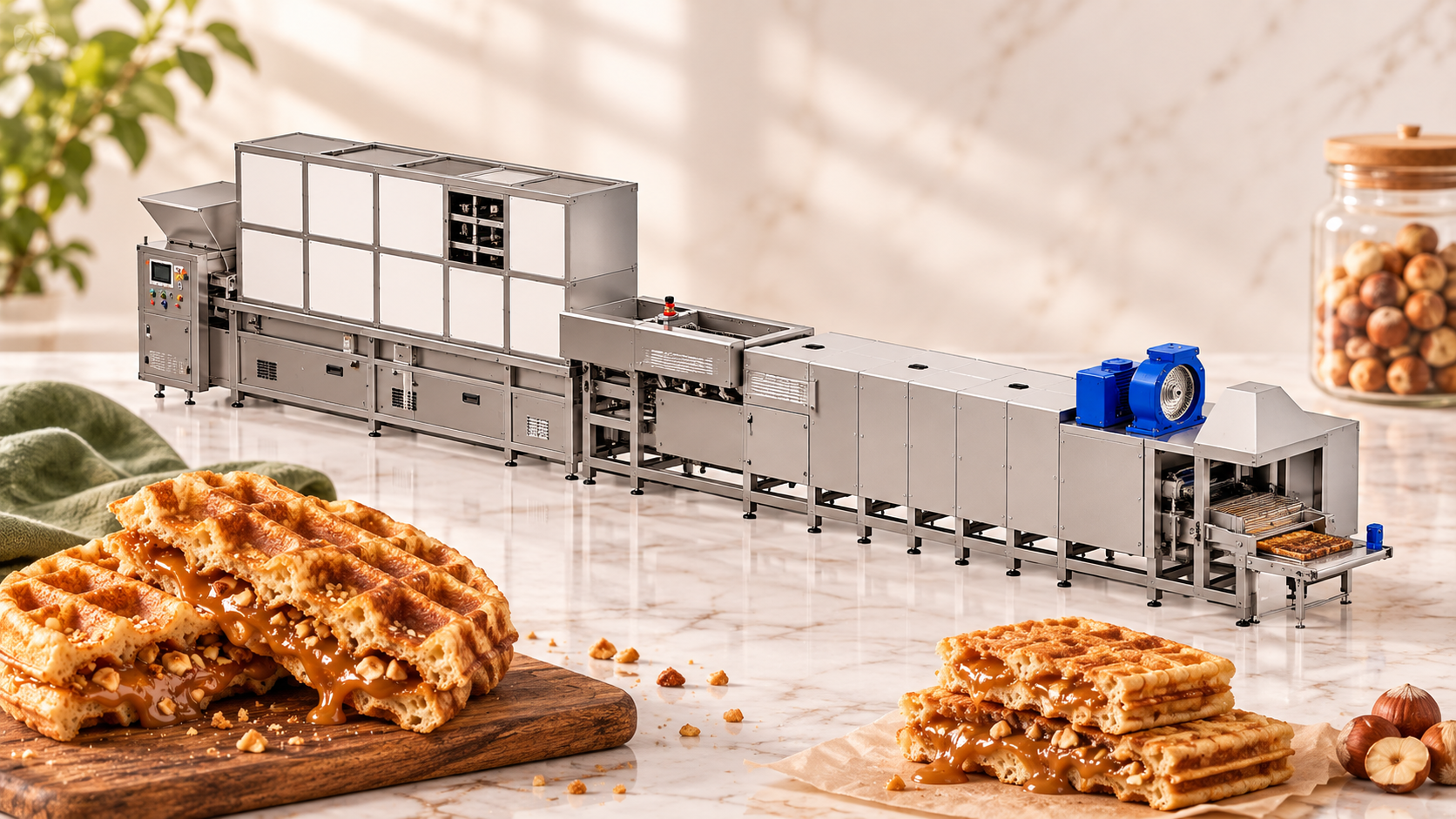
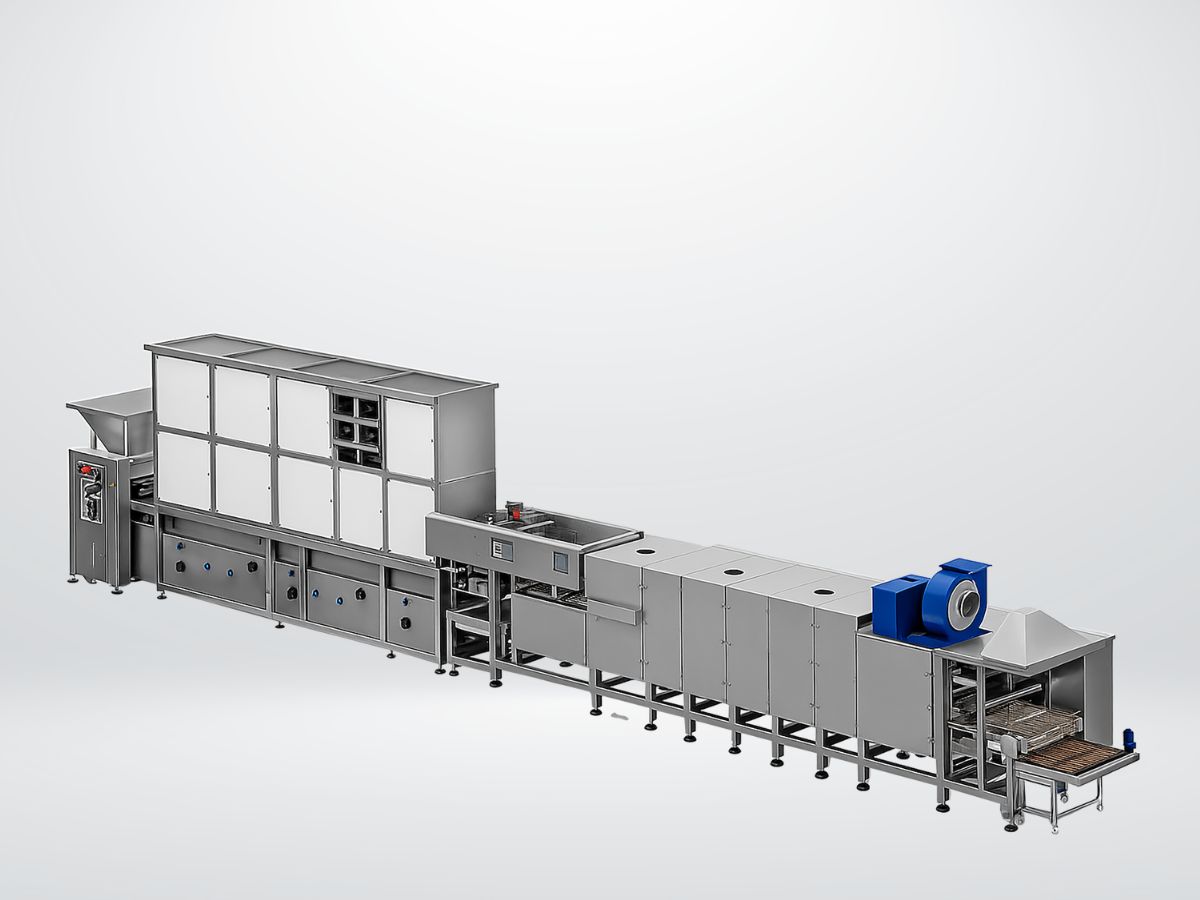
A waffle line is a chain of connected machines. Batter is prepared and deposited into baking plates, the waffles bake, then they are cooled, filled if they are sandwich waffles, cooled again, inspected and packed. Every link in that chain can be built in a simple or an advanced version, and the price reflects the sum.
For scale, B&F Engineering waffle and sandwich waffle lines offer adjustable output from 4,000 up to 40,000 waffles per hour. Between those points the machine changes in size, plate count, drives and controls, so the price spread is wide. Our article on industrial waffle production lines, efficiency and automation describes the line in more detail.
The cost drivers, from largest to smallest
1. Output and number of baking plates
Output depends on how many baking plates you run and the baking time. More plates give more waffles per hour, and they also need a bigger oven, a stronger frame and more heating and drive power. This is the single biggest cost driver. If you add 50% more capacity, expect the oven section to cost noticeably more.
B&F lines allow adjustable baking time with smart temperature management, so the same oven can serve different recipes, from thin crisp waffles to thicker, softer ones.
2. Waffle format and plate design
Plate shape and depth determine size, pattern and thickness. Interchangeable mold systems let you run several shapes and sizes on one line, which adds engineering but saves you from buying a second line later. If you plan to make mini waffles, round waffles and rectangular sandwich waffles, discuss all three at the quoting stage.
3. Sandwiching and filling system
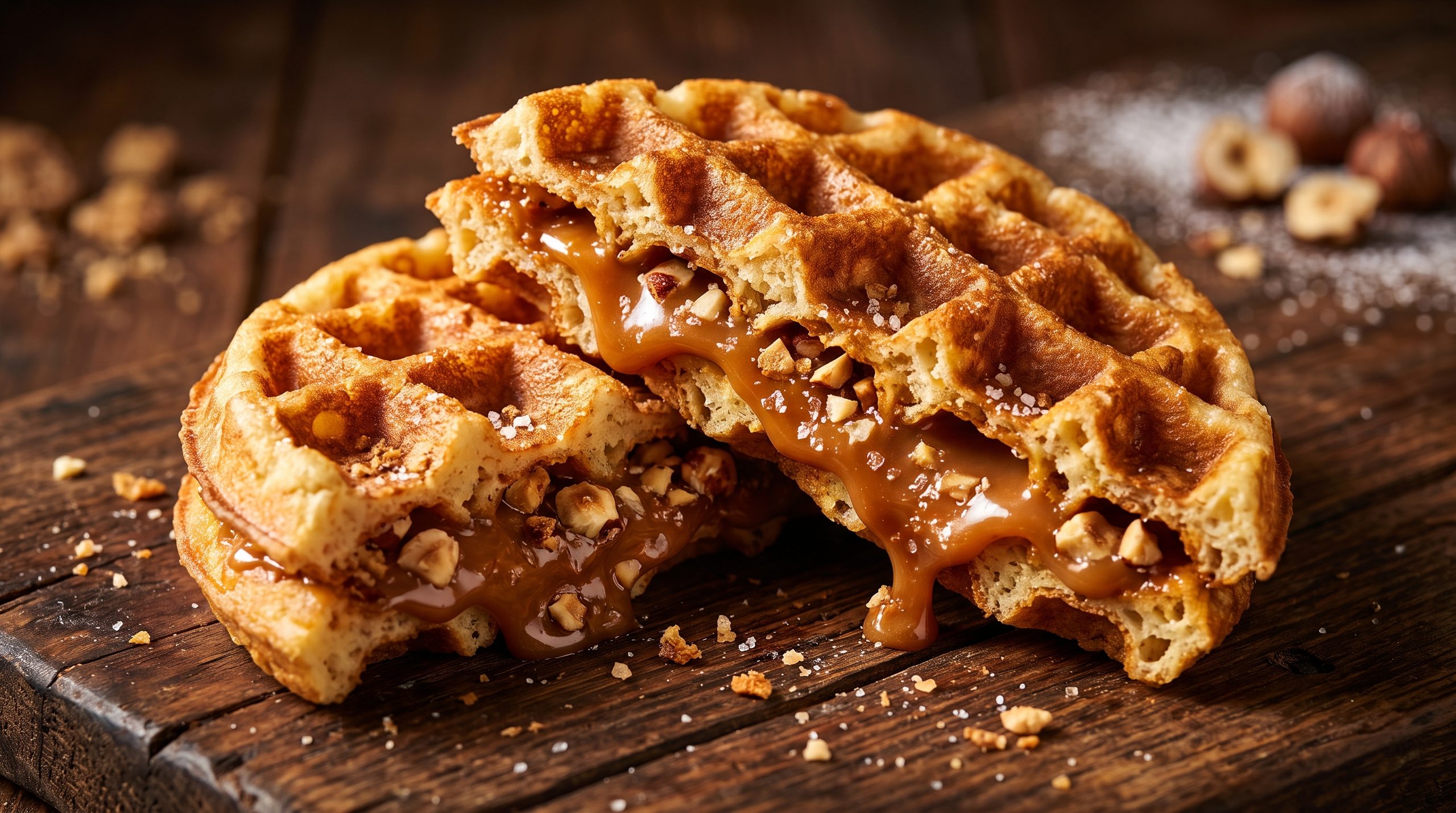
Filled waffles need a filling unit and a sandwiching module. The filling system has a large effect on cost and on your daily profit. B&F uses a servo-driven filling system that injects creams, chocolate, fruit-based fillings or nut pastes with controlled weight and minimal waste. Accurate dosing pays for itself, because overfilling by a small amount on every waffle turns into a large cost over a year. Particle depositors can be added if you want chocolate chips, raisins or crunchy inclusions.
Our article on precise filling and quality control in sandwich waffle production goes deeper into this stage.
4. Controls and recipe management
A line with an HMI that stores recipes lets operators switch between products with few manual changes. That adds to the price and saves minutes at every changeover. Ask how many recipes the system can store and what parameters each recipe controls.
5. Energy efficiency and insulation
Baking is the biggest energy user in a waffle line. B&F offers energy-efficient insulation that reduces heat loss by up to 30%. When you evaluate the price, compare energy use per thousand waffles and not only the purchase price. A better insulated oven costs more upfront and then saves money on every shift.
6. Hygiene features and inspection
Look at the standard and optional features:
- CE-certified, food-grade materials
- CIP-compatible surfaces for easy cleaning
- quick disassembly of modules
- a pre-oiling system for anti-stick operation
- optional vision-based defect control
Vision inspection and automatic reject systems reduce customer complaints and waste, and they are worth pricing as an option.
7. Cooling, conveying and packaging
Waffles must cool before filling or packing. A cooling tunnel with adjustable capacity, and a conveyor layout that fits your space, add to the price. Packaging and palletizing can be integrated as well: B&F’s automation solutions include robotic end-of-line equipment, flow-pack and thermoform units, and labeling. The more of this you add, the less manual handling you have, and the more the project costs.
8. Installation, training and commissioning
Installation, commissioning and training are sometimes left out of a price comparison, and then they surprise the buyer. Check what is included, and plan for freight and local utility work as well.
When comparing waffle machine quotes: make sure each quote states the number of plates, hourly output on your recipe, filling accuracy, cooling and packing scope, Incoterms, and what is included in installation and training.
What the price list will not tell you
A published price does not show how a machine behaves with your batter. It does not show your yield, your waste at the filling station, your energy use or your changeover time. Those numbers decide your return far more than a small difference in the purchase price. This is why a pilot trial is a smart step: our demo production and pre-installation service lets you test your own recipe and see real output before you decide.
How to calculate waffle line ROI
Use the same approach you would use for any production line:
- Good waffles per year = hourly capacity × production hours × line efficiency.
- Contribution per waffle = ex-factory selling price minus variable cost (ingredients, filling, packaging, energy, direct labor).
- Annual contribution = good waffles × contribution per waffle.
- Payback (years) = total installed investment ÷ annual contribution.
In an illustrative case, a line with a nominal 10,000 waffles an hour running 4,000 hours a year at 75% efficiency would produce 30 million good waffles. At a contribution of 0.01 per waffle in your local currency, that equals 300,000 per year. Divide your quoted investment by that number and you get a payback figure. Change the efficiency to 60% and the contribution falls to 240,000, which shows why line efficiency is as important as machine price.
Where waffle ROI comes from in practice
- Higher yield. Fewer broken waffles and less trim mean more sellable pieces from the same batter.
- Accurate filling. Control the weight of every piece and you recover real money.
- Lower energy cost. Insulation and good temperature control reduce cost per thousand.
- Less labor. Automatic handling and packing reduce operator count.
- More products on one line. Flexible plates and recipes let you serve more customers without more equipment.
Where ROI gets lost
- Running below capacity because sales do not match the line.
- Long changeovers and slow cleaning.
- Quality rejects at the customer.
- Underestimating packaging costs.
- Ignoring the ramp-up period at the start.
A staged investment approach
You do not have to buy the final configuration on day one. A staged purchase can reduce risk and spread cost:
- Stage one: baking oven with single waffle capability and basic cooling and packing.
- Stage two: sandwiching and filling module once your filled waffle sales justify it.
- Stage three: particle depositors, vision inspection and end-of-line automation as volume grows.
This only works if the first stage is designed for expansion, so ask the supplier to confirm which modules can be added later and what space and utilities they will need. Making space and utilities available now is much cheaper than rebuilding later.
Sample quote comparison sheet
Use a sheet like this to compare offers from different suppliers on equal terms.
| Item | Supplier A | Supplier B | Supplier C |
|---|---|---|---|
| Baking plates and nominal output | |||
| Output with your recipe (tested) | |||
| Filling system and accuracy | |||
| Cooling and conveying scope | |||
| Packing and automation scope | |||
| Energy consumption per 1,000 waffles | |||
| Cleaning time per shift | |||
| Installation, training, commissioning | |||
| Incoterm and delivery time | |||
| Spare parts and after-sales support |
Fill it in with figures from each quote, and mark the gaps. If a supplier cannot give you a number, ask for it in writing.
Waffle line or pancake line first?
Some buyers are not sure whether to start with waffles or pancakes. Both are filled, ready-to-eat bakery snacks, and both can be sold in ambient, frozen and functional versions. Waffles often need a more complex baking plate and a different handling approach, while pancake lines are known for soft sandwich formats such as dorayaki. The best choice depends on your market: look at what your target retailers already stock and where the gaps are. Our CAPEX and ROI guide for industrial pancake machinery covers the pancake side in the same way.
Frozen, protein and gluten-free waffles: extra cost or extra margin?
B&F waffle lines are compatible with vegan, gluten-free, high-protein and functional recipes. That matters for the business case, because these products often sell at higher prices than classic waffles. If you plan to enter these segments, talk about it at the start so the plates, temperatures and handling suit the recipe. Our R&D team can help you test it before you commit.
Frequently asked questions
How much does an industrial waffle machine cost?
The price depends on output, plate count, filling and sandwiching, cooling, packaging and controls. B&F waffle lines cover roughly 4,000 to 40,000 waffles per hour, and the cost rises with capacity and automation. A quote based on your recipe and output gives the only reliable figure.
What is the payback period for a waffle line?
Payback equals your total investment divided by annual contribution. It depends on selling price, variable cost and line efficiency. Lines that run many hours at high efficiency and sell their full output recover the investment much faster.
Can one line make both single and sandwich waffles?
Yes. B&F lines include sandwiching and filling injection modules for filled waffles, and they can also produce single waffles. Interchangeable molds allow different shapes and sizes.
Which fillings can a waffle line handle?
A servo-driven filling system can inject creams, chocolate, fruit-based fillings and nut pastes, and particle depositors can add chocolate chips, raisins or crunchy inclusions.
What can I do to reduce the cost of my waffle line?
Define the product range before you buy, size the line to your real demand, ask for a staged configuration you can expand, and test your recipe in a pilot trial. Cutting plates or automation you will need later usually costs more than it saves.
Get a quote for your waffle line
Share your target output, products and packaging, and B&F engineers will propose a configuration you can use in your ROI calculation. Request a quote for your waffle production line, or review the waffle and sandwich waffle production line.
Contact Us Today
Discuss your project with our engineering team and discover how our machines can optimize your production.