How to Start a Rice Cake Manufacturing Business: Plant, Machines and Payback
Rice cakes are one of the simpler snacks to make and one of the easier ones to get wrong. The product looks basic, a puffed disc of grain, but a profitable rice cake factory depends on choices that are made months before the first cake comes out of the mold: which market you serve, how big the line is, where the building is, and how the plant flows from raw grain to a sealed pack.
This guide walks through the full process of starting a rice cake manufacturing business. It is written for entrepreneurs, distributors who want to move into production, and existing food companies adding a new category. You will find the decisions in the order you need to make them, with the machine list, utilities, staff, certifications and a realistic way to think about payback.
Step 1: Decide what you will sell and to whom
Before you look at a single machine, define the product and the customer. The same line can make very different businesses.
- Plain and multigrain rice cakes sold in retail packs. This is the classic format, with the strongest volume and the tightest margins.
- Flavored and seasoned cakes, which are oiled and dusted with seasoning. They sit in the savory snack aisle and often carry a better price.
- Chocolate-coated rice cakes, which target the confectionery and “better snack” buyer.
- Mini cakes and thin crisps, popular for portion control and for lunch boxes.
- Private label and co-packing, where you make the product for a retailer or a brand and compete mainly on cost, quality and reliability.
Each choice changes the equipment you need. Plain cakes need a puffing machine and a packer. Flavored cakes add an oiling and seasoning unit. Chocolate-coated cakes add an enrober and a cooling tunnel. Decide this first, because it fixes your machine list and your floor plan.
Step 2: Check demand and set a realistic volume
Rice cakes sit inside the wider “better-for-you” snack trend. Recent U.S. retail data reported by BakeryAndSnacks.com, drawing on Spins and Circana figures, showed better-for-you snack sales growing about 10% over the 52 weeks to March 2026, against about 1% for conventional snacks. Rice cakes are only one part of that picture, and local conditions differ, so treat this as direction rather than a forecast for your market.
What matters for your plan is simpler:
- Who will buy the first 50% of your output? Name the retailers, distributors or brands.
- What price will they pay ex-factory, and what do competing products cost?
- How much can you sell in year one, year two and year three?
Size the line for the volume you can sell in the first two or three years, with room to add equipment later. B&F Engineering rice cake lines cover 2,000 to 10,000 cakes per hour, so the range is wide enough to start modestly and grow.
Step 3: Choose the line concept and capacity
At this stage you are choosing between a few standard concepts:
| Concept | Typical scope | Good fit for |
|---|---|---|
| Entry line | Puffing machine, basic cooling and manual or semi-automatic packing | Startups testing a local market |
| Mid-size line | Puffing machine, automatic transfer, oiling and seasoning, packaging | Regional brands and private label |
| Full coated line | Puffing, seasoning or enrobing, cooling tunnel, automatic packaging | Export-oriented brands and premium products |
The numbers in the capacity range come from the number of mold stations and the cycle time. More stations mean more output but also a larger building, bigger utilities and a higher investment. Ask your supplier to show how the line can grow, for example by adding molds, a seasoning unit or an enrober later, so you do not have to replace anything.
Step 4: Find and prepare the building
A rice cake plant is a food factory, so the building matters as much as the machines. You are looking for a building that supports hygienic flow, not just an empty shed.
Floor area and height. The puffing section, downstream equipment, packaging and storage all need space. Do not forget raw material storage, packaging storage, a finished goods area and walking space for operators and maintenance. Ceiling height must allow equipment, ventilation and, if you plan it, conveyors above the line.
Floors, walls and drainage. Floors should be sealed, non-slip and easy to clean, with drainage where wet cleaning takes place. Walls and ceilings should be smooth, washable and free of flaking paint.
Separation of zones. Raw material handling, production, packaging and storage need to be separated so that dust, pests and cross-contamination stay under control. A good layout also keeps staff and material flows from crossing. This is the work our layout and process design service covers, and it is far cheaper to get it right on paper than to move walls later.
Tip: Ask for the layout before you sign a lease. A building that looks large enough on a viewing can turn out to be wrong once you place the line, the utilities and the hygiene zones.
Step 5: Plan the utilities
Equipment suppliers will ask for your site conditions, so gather these early.
- Electrical supply. Heated molds and drives need a stable, correctly rated supply. Confirm voltage, phases and available capacity with your utility.
- Compressed air. Many pneumatic functions on the line depend on clean, dry air, so plan for a suitable compressor and air treatment.
- Cooling water or chilled water. Some components and the cooling section need it.
- Ventilation and extraction. Heated molds and seasoning create steam, dust and vapor that must be removed.
- Water and drainage for cleaning and for staff facilities.
- Lighting, pest control and waste handling.
Utilities are one of the most common sources of delay on new projects. Order and approve them in parallel with the equipment, not after.
Step 6: Source your raw materials
Rice cakes are a short ingredient list, so raw material quality shows directly in the finished product. The process behind the product is described in How to Produce Rice Cakes. Grain type, size and moisture influence expansion, density and taste. A recipe usually also includes salt, sometimes oil, and in multigrain versions other grains and legumes.
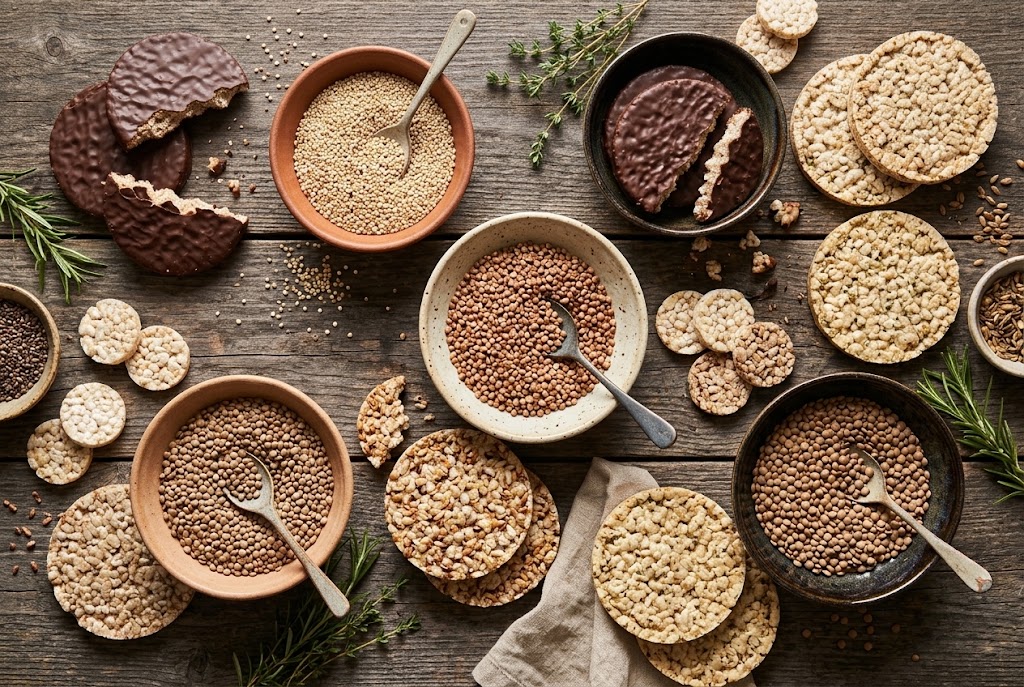
Work out where you will buy, how you will store, and how you will test incoming material. Consistent moisture content is especially important for stable puffing. A reliable supplier agreement is as valuable as a good machine. B&F lines can also process corn, quinoa, buckwheat, lentils, chickpeas and bulgur wheat, which gives you room to expand your range without changing the basic line.
If you want help with formulation, our recipe development service works with your raw materials and tests them under real production conditions.
Step 7: The machine list for a rice cake factory
A complete rice cake plant normally includes more than the puffing machine. Here is a practical list to compare against any proposal.
- Raw material handling. Storage, cleaning, conditioning and dosing of grain.
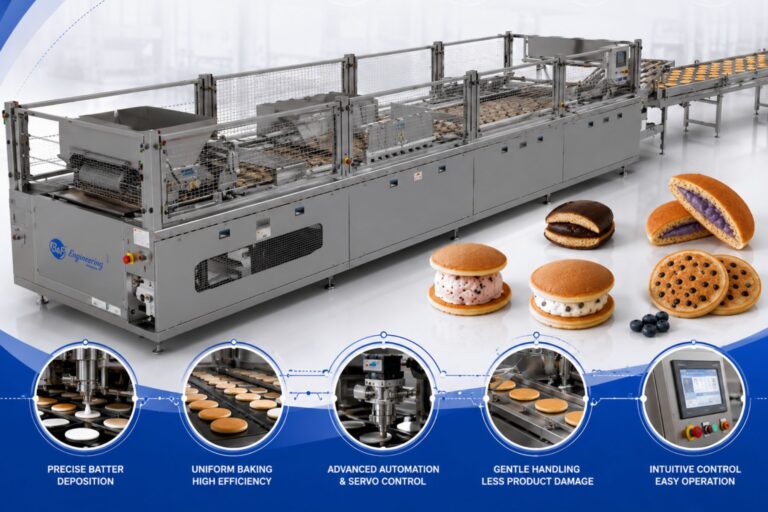
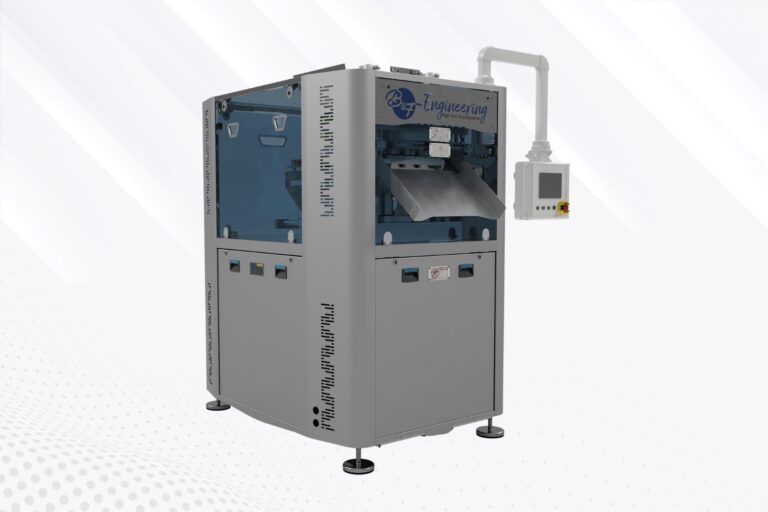
- Rice cake puffing machine. The heart of the line, available with round, mini round, square or rectangular molds, with custom shapes on request.
- Transfer and cooling conveyors. Cakes are fragile when they leave the mold, so handling must be gentle.
- Oiling and seasoning unit for flavored cakes, with a drum or conveyor system suited to fragile products.
- Chocolate enrober and cooling tunnel for coated cakes.
- Counting, stacking and packaging machines. Flow-pack or thermoform systems, with optional weighing, labeling and case packing.
- Quality control tools. Metal detection, weight checks, moisture measurement and, if possible, vision inspection.
- Utilities and cleaning equipment. Compressor, extraction, wash stations and tools.
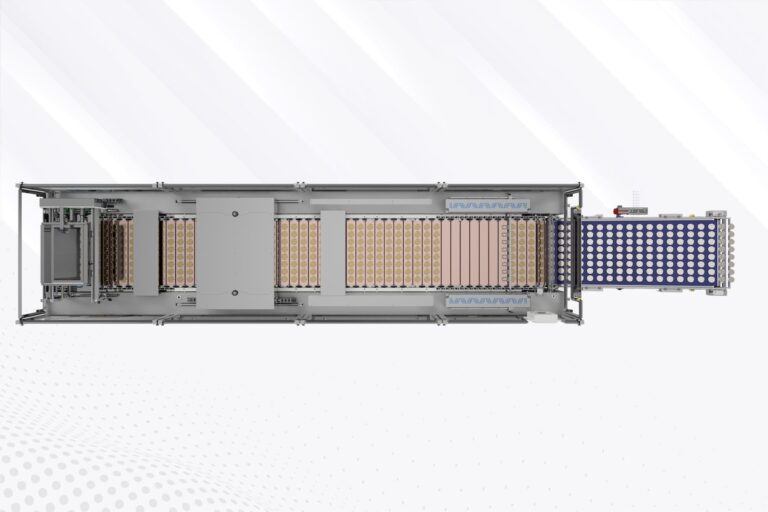
The more of this list that comes from one engineering partner, the fewer interface problems you will face. B&F Engineering designs lines as one system, so the puffing machine, the downstream units and the controls work together from the start. For a closer look at the layout from bulk grain to packed cakes, read Designing a Complete Rice Cake Production Line.
Step 8: Build hygiene and food safety into the design
Plan food safety into the line, not around it. Look for stainless steel in food-contact areas, smooth welds, guards that open quickly, and surfaces that are easy to clean. Ask whether the supplier follows recognized hygienic design principles, and whether the equipment carries CE marking. B&F lines are CE-certified and built with cleaning and maintenance in mind.
Step 9: Staff and training
The number of people you need depends on automation. A semi-automatic line needs more operators for loading, transfer and packing. A fully automatic line needs fewer operators but better-trained technicians.
Think in roles:
- production operators for the puffing and downstream equipment
- a line leader or shift supervisor
- a maintenance technician with mechanical and electrical skills
- quality control staff
- packing and warehouse staff
Training before the machine arrives saves weeks later. Through our demo production and pre-installation program, your operators and engineers can run your own recipe on a pilot line, learn cleaning and maintenance routines, and arrive on site already familiar with the machine.
Step 10: Registrations, standards and certification
Requirements vary by country, so check with your local authority first. In general you should expect:
- company and food business registration
- a HACCP-based food safety plan
- allergen management and traceability procedures
- labeling that follows the rules of each market you sell to
If you plan to supply large retailers or export, they will usually ask for a recognized food safety certification such as ISO 22000, FSSC 22000, BRCGS or IFS. Build the factory with that audit in mind. Retrofitting hygiene zones is expensive.
Step 11: Packaging, shelf life and logistics
Rice cakes are dry products, but they absorb moisture quickly and lose crispness. Packaging must protect against humidity and breakage. Decide on your pack format early, because it determines your packaging machine, your film, and your carton size.
Plan your storage and distribution too. Where will you store finished goods, how long, and how will they travel? Fragile products need sensible pallet patterns and cartons that protect the cakes.
Step 12: Budget structure and payback
Do not try to estimate the investment from a single machine price. Break the budget into blocks:
- production equipment and downstream units
- installation, commissioning and training
- building preparation and utilities
- packaging line and quality control equipment
- certification, licenses and consultancy
- working capital for raw materials, packaging and stock
For payback, calculate annual contribution (good output multiplied by selling price minus variable cost) and divide your total investment by it. Our separate guide to rice cake machine price factors and ROI explains the method with an example. Two inputs deserve the most attention: line efficiency and the share of capacity you can actually sell. A plant that runs at 70% of its nominal rate and sells every cake will beat a larger plant that runs half empty.
Allow for a ramp-up period. In the first months you will adjust recipes, train staff and fix small issues, so output and margin will be lower than your steady-state model.
Step 13: A realistic project timeline
Every project is different, but most follow this order:
- Product and market definition
- Capacity and line concept
- Layout and process design
- Building and utility preparation
- Equipment manufacturing and factory acceptance
- Shipping, installation and commissioning
- Trial production, certification and first sales
Several of these steps overlap. Building work and equipment manufacturing run in parallel, and certification preparation starts long before the first sale. Commissioning support from the equipment maker shortens the last stage, because engineers stay with your team through the first production runs.
Own brand, private label or both?
Your business model changes how you spend money. An own brand needs marketing, design, a sales team and patience, because shelf space is earned slowly. Private label and co-packing need less brand investment but put you under constant price pressure and tie your fortune to a few big customers. Many new producers start with private label to fill the line and build cash, then launch their own brand once the factory is stable. If you choose this route, make sure the line can handle different pack sizes, flavors and mold shapes, because every customer will want something slightly different.
Sales channels to plan for
Rice cakes sell through several channels, each with its own rules:
- Supermarkets and discounters. High volume, strict specifications, long payment terms and audit requirements.
- Health stores and specialty retail. Smaller volumes, better margins and a strong interest in clean ingredients and claims.
- Export distributors. Good for filling spare capacity, but you must check labeling, shelf-life requirements and documentation for each country.
- Online sales. Lower volumes per order, higher packaging and logistics requirements.
- Food service and vending. Single-serve packs and mini formats suit these channels.
Choose two channels at the start and learn them well, instead of spreading across all five.
A simple budget checklist for the first meeting with your bank or investor
When you present the plan, show that you have thought about more than machines. A convincing summary lists the product and customer, the line concept and capacity, the site and utilities, the investment blocks above, a monthly ramp-up plan for the first year, and the price and cost assumptions behind your payback. Investors listen carefully to the ramp-up and the sales plan, because those are where new factories fail, much more often than on the machine itself.
Common mistakes when starting a rice cake business
- Buying capacity before customers. Sign letters of intent or supply agreements first.
- Underestimating the building. Hygiene zones, storage and utilities take more space than expected.
- Skipping pilot trials. Test your recipe on a real line before you decide.
- Ignoring downstream equipment. The puffing machine is not the whole line.
- Forgetting certification timing. Retail customers may refuse to list a product until your audit is done.
- Buying from different suppliers with no one responsible for the whole system.
Plan your plant with an engineering partner
B&F Engineering supplies complete rice cake lines, from puffing to coating and packaging, together with layout design, recipe development and commissioning support. Tell us your target capacity and product range, and we will prepare a turnkey proposal. Request a quote for your rice cake factory, or review the rice cake production lines in more detail.
Sıkça Sorulan Sorular
Rice Cake Production Lines
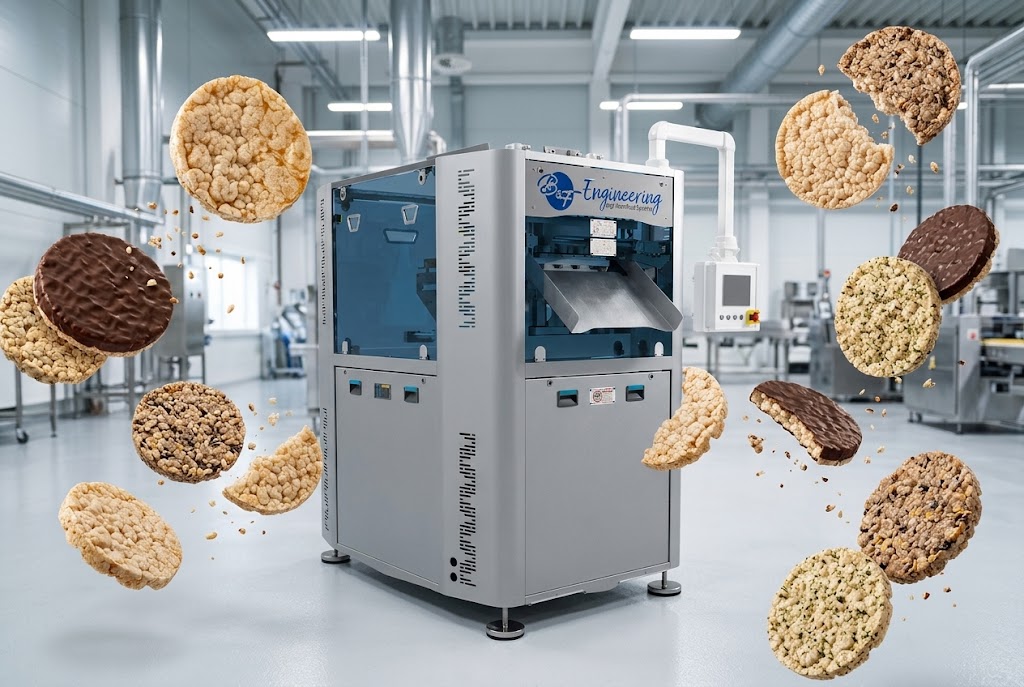
Produce traditional or trendy rice cake products with maximum flexibility and precision. From bite-size products to chocolate-coated snacks, our systems adapt to any market demand.
Contact Us Today
Discuss your project with our engineering team and discover how our machines can optimize your production.