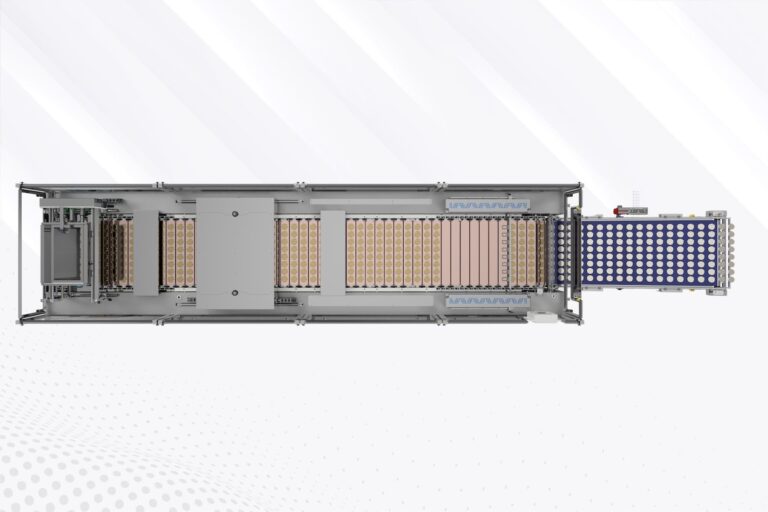
For industrial bakeries and food manufacturing enterprises, acquiring high-capacity food processing equipment is a major Capital Expenditure (CAPEX). Evaluating the price of an industrial pancake machine or a popcake pancake machine requires looking beyond the initial sticker price. A strategic procurement decision must analyze the Total Cost of Ownership (TCO), Operational Expenditure (OPEX) optimization, and the exact timeline for Return on Investment (ROI).
This procurement guide provides a technical and financial framework to estimate the true costs, evaluate pricing variables, and calculate ROI when investing in heavy-duty pancake production machinery.
1. Deconstructing the CAPEX: What Drives Industrial Pancake Machine Prices?
When comparing manufacturers globally, a baseline quotation for a fully automated line varies significantly based on engineering metrics. The core variables dictating the initial machinery cost include:
Material Selection & Structural Integrity
- AISI 304 vs. AISI 316 Stainless Steel: Standard food-contact zones require AISI 304 steel. However, lines engineered for harsh Clean-in-Place (CIP) chemical washes utilize AISI 316 stainless steel, which increases durability and structural cost but drastically eliminates corrosion risks.
- Griddle Plate Metallurgy: High-density, precision-ground gray cast iron or carbon steel alloys with specialized non-stick coatings require advanced machining processes, directly affecting the core hardware price.
Component Sourcing & Automation Architecture
Cheap machinery often cuts costs on sub-components. Premium turnkey lines integrate world-class sub-systems:
- Pneumatic & Motion Control: Festo, SMC, or equivalent pneumatic valves.
- Automation & Drives: Siemens S7-1500, Allen-Bradley, or Omron PLC systems paired with multi-axis synchronized servo motors for precise volumetric deposition ($\pm 0.1\text{ mm}$ tolerance).
- Electrical Switchgear: Schneider Electric or ABB components housed in IP65 or IP69K-rated stainless steel enclosures.
2. OPEX Breakdown: The True Cost of Running the Line
A lower initial machinery price can be a trap if the ongoing Operational Expenditure (OPEX) is inefficient. Financial committees must cross-examine the machinery’s utility footprints:
Total Cost of Ownership (TCO) = Initial CAPEX + (Annual OPEX × Machinery Lifespan)
Thermal Energy Efficiency: Heating the baking plates is the most energy-intensive phase. Industrial lines utilize high-efficiency longitudinal gas burners or direct-contact electric heating elements. Efficient thermal insulation reduces radiant heat loss, cutting gas/electricity consumption by up to 20% to 30%.- Raw Material Yield & Scrapless Production: If a low-end depositor leaks or lacks volumetric precision, a $1\text{ gram}$ batter giveaway per pancake on a line running at 30,000 pieces per hour translates to 30 kg of wasted batter every single hour. Over a year of multi-shift operation, this waste can equal the cost of a premium depositor.
3. Financial Model: Calculating ROI for a 30,000 Pcs/Hour Line
To justify the CAPEX to the executive board, purchasing managers must build a rigorous ROI projection. Below is a realistic financial simulation for a medium-to-high capacity automated turnkey plant.
Baseline Assumptions:
- Nominal Capacity: 30,000 pancakes / hour
- Average Weight per Product: $35\text{ grams}$
- Operational Schedule: 16 hours / day (2 shifts), 260 days / year
- Total Annual Output: 124,800,000 units
- Wholesale Market Value: $0.08 per unit
- Gross Annual Revenue Potential: $9,984,000
Cost Matrix & Payback Period Estimation:
| Cost / Performance Metric | Low-Tier Semi-Automated Line | BAF Engineering Turnkey Automated Plant |
| Estimated CAPEX (Initial Investment) | $120,000 – $150,000 | Contact for Engineering Quote |
| Labor Requirement (Per Shift) | 5 – 7 Operators (Manual handling) | 1 – 2 Operators (Full automation) |
| Material Waste / Scrap Rate | $\approx 3.5\%$ (Pneumatic deposition) | $< 0.5\%$ (Servo-driven volumetric precision) |
| Unscheduled Downtime (Annual) | $\approx 180\text{ hours}$ (Frequent seal failures) | $< 24\text{ hours}$ (Predictive maintenance ready) |
| Estimated Equipment Lifespan | 3 – 5 Years | 15+ Years (Heavy-duty cycle construction) |
| Payback Period (ROI Milestone) | 18 – 24 Months (High OPEX drag) | 8 – 12 Months (Rapid labor & waste savings) |
4. Mitigating Risk: Factory Acceptance Testing (FAT) & Warranties
When investing in industrial assets, protecting your capital requires a strict procurement SLA (Service Level Agreement).
- FAT (Factory Acceptance Testing) Protocol: Never release the final milestone payment without a comprehensive FAT. The machinery manufacturer must run the fully assembled line at maximum throughput in their facility using your exact flour/batter rheology profile to verify capacity metrics.
- SAT (Site Acceptance Testing): Upon delivery, technicians must supervise the mechanical anchoring, utility connections, and commissioning, ensuring the line matches the pre-agreed OEE (Overall Equipment Effectiveness) benchmarks on your factory floor.
- Spare Parts Lifecycle Support: Ensure the supplier guarantees the availability of critical mechanical components (heating elements, servo drives, conveyor belts) for a minimum of 10 years to prevent cataclysmic line stoppages.
Request a Custom Financial Feasibility Study & RFQ
Are you preparing a budget proposal for a new snack or bakery production line? Standard price tags do not apply to customized food engineering solutions. Your exact footprint, electrical grid specifications, local gas costs, and target throughput will define the final machinery configuration.
Contact the BAF Engineering corporate sales division today. Our financial and mechanical engineers will provide a detailed technical quote alongside a tailored ROI calculation template based on your regional operating costs.
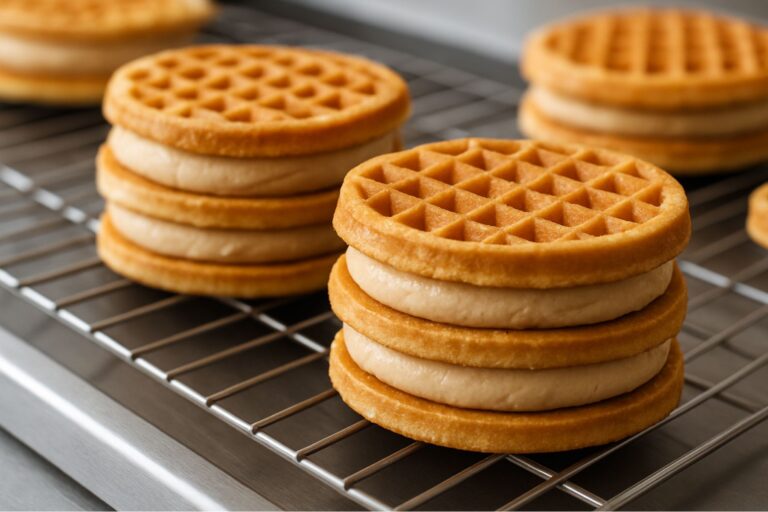
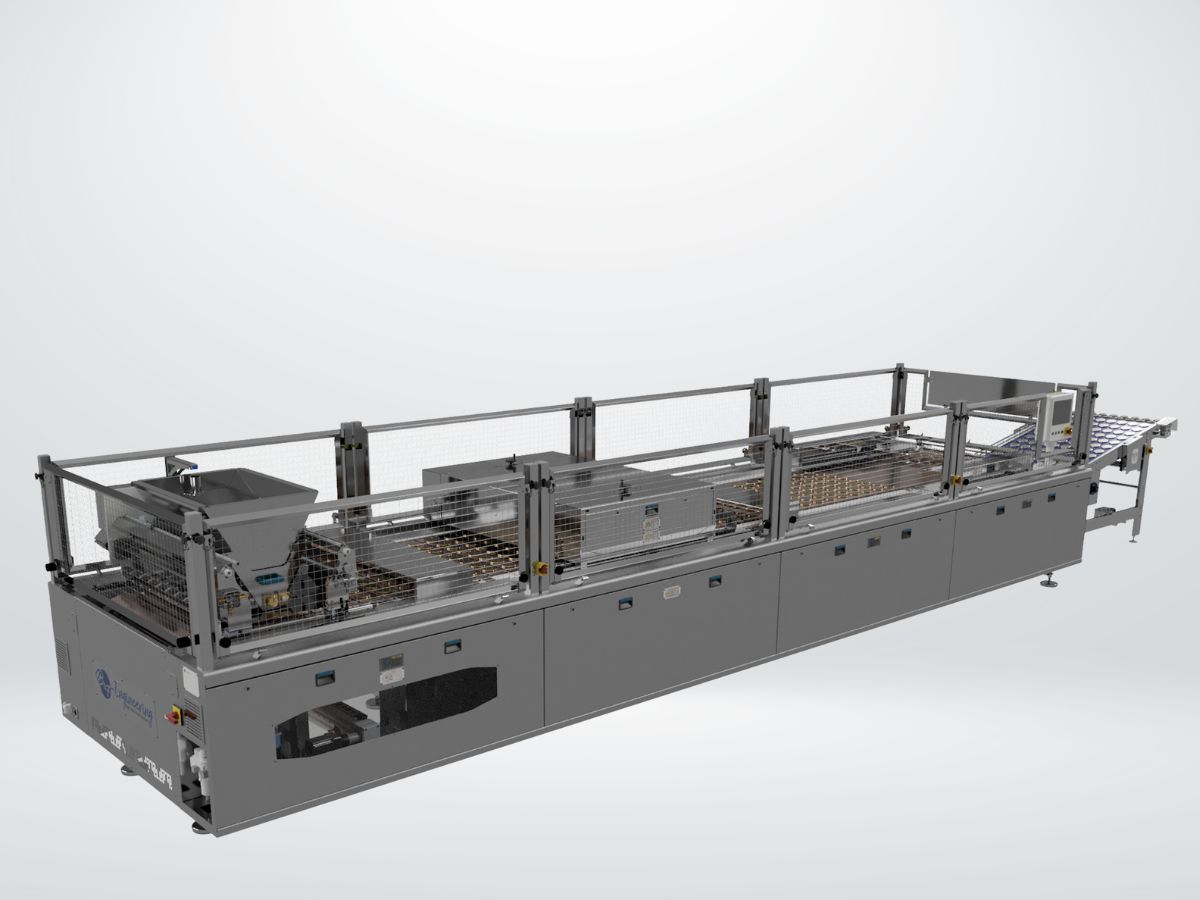
Pancakes & Sandwich Pancakes Production Line
Modern snack trends demand creativity, consistency, and speed—qualities that define B&F Engineering’s Pancake Production Lines. Whether you’re producing single-layer pancakes or filled sandwich pancakes (like dorayaki), our flexible systems are engineered for seamless performance. Ready to transform your production? Let’s build your custom pancake line today.
Contact Us Today
Discuss your project with our engineering team and discover how our machines can optimize your production.