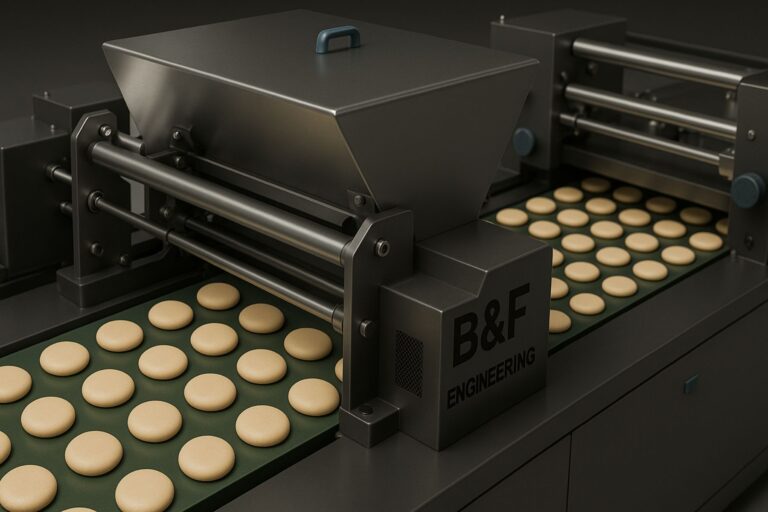
The global ready-to-eat snack market is moving fast, and pancakes have become one of its most versatile carriers. From single-layer breakfast pancakes sold frozen in supermarkets to filled dorayaki snacks dominating Asian and European retail shelves, demand for consistent, high-volume output keeps climbing. Meeting that demand starts with the right equipment — and that means understanding how modern industrial pancake production lines are designed, configured, and matched to your product strategy.
This guide breaks down the components, automation tiers, and buying criteria that matter in 2026, with practical detail on fully automatic pancake machines, precise dosing pancake machines, and complete dorayaki production plant setups.
What Are Industrial Pancake Production Lines?
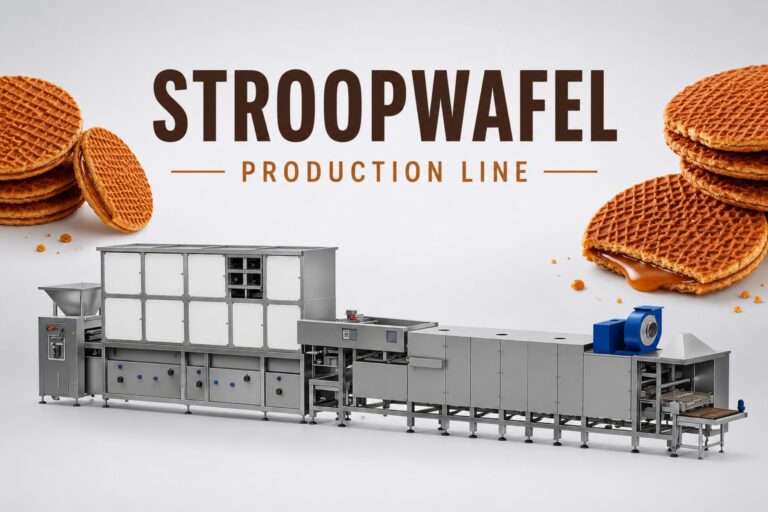
An industrial pancake production line is an integrated system of synchronised machines that takes raw batter and converts it into finished, packaging-ready pancakes — at scale. Unlike commercial countertop pancake makers (which serve single-location food service), these lines are built for continuous operation in food factories, with throughputs ranging from a few thousand to tens of thousands of pieces per hour.
A modern line typically covers six core stages:
- Batter mixing and preparation
- Precise volumetric dosing onto the baking surface
- Multi-zone baking (usually a tunnel oven or copper-plate griddle)
- Flipping, cooling, and surface finishing
- Filling, sandwiching, sealing, and printing for sandwich and filled formats
- Final cooling, metal detection, and packaging
The level of automation, the number of stages included, and the format flexibility on offer are what separate a basic griddle setup from a true production line.
Why the Pancake and Dorayaki Market Is Booming
Three forces explain the surge in capital investment in pancake equipment over the last few years.
Convenience snacking. Consumers want grab-and-go options that travel well, taste premium, and don’t require utensils. Filled sandwich pancakes — including dorayaki — fit that profile better than almost any other bakery product.
Format flexibility for retailers. A single line that can produce single pancakes, sealed sandwich pancakes, double-filled snacks, and printed branded pancakes lets brands expand their SKU range without building a new factory each time.
Health and dietary positioning. Vegan, gluten-free, high-protein, and low-sugar pancake variants now sit on supermarket shelves alongside traditional formats. Industrial lines that handle multiple batter types — without recipe contamination — open premium segments to manufacturers who previously competed only on price.
For a higher-level overview of the consumer side, see our companion article on the rise of ready-to-eat industrial pancake production.
Core Components of a Modern Pancake Production Line
1. Mixing and Batter Preparation
Planet mixers or jacketed stirred tanks homogenise flour, eggs, milk, sugar, and leavening agents into a uniform batter. Temperature-controlled tanks keep viscosity stable across a long shift, which is critical for downstream consistency. Inconsistent batter is the single biggest hidden cause of weight, diameter, and texture variation in finished products.
2. Precise Dosing Systems
The dosing or depositing unit is where uniformity is won or lost. Volumetric pumps with servo-driven nozzles drop a controlled volume of batter onto the baking surface in evenly spaced rows. The accuracy of this stage directly determines pancake diameter, weight, and edge quality. We’ll dig into precision dosing in more detail below.
3. Tunnel Oven or Copper-Plate Griddle
This is the baking heart of the line. High-thermal-mass copper or specialty alloy plates deliver even bottom-side heat, while top-mounted radiant or convection heaters cook the upper surface before flipping. Multi-zone temperature control — usually managed through a PLC — adjusts the heat profile by zone to drive the Maillard reaction that produces the characteristic golden-brown surface. We’ve covered the engineering of that result in Golden-Brown Perfection in Pancake Production.
Industrial baking times typically run between 100 and 120 seconds, balancing throughput against texture quality.
4. Sandwiching, Filling, and Sealing Unit
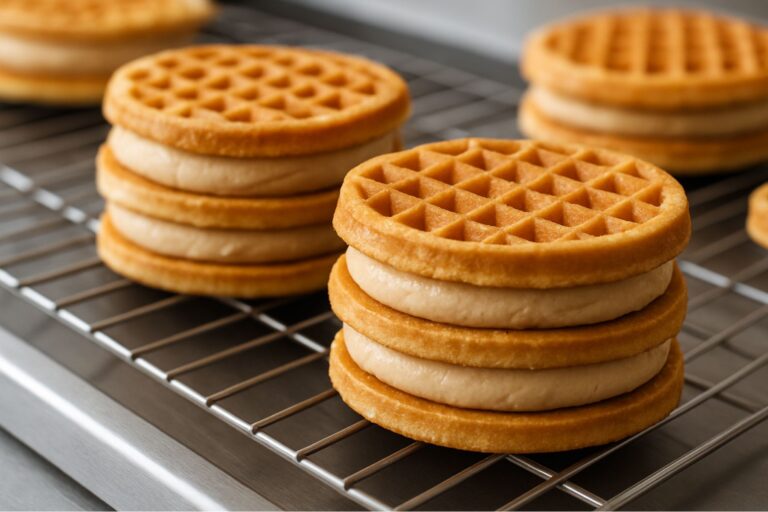
Synchronised with the oven, this section aligns the pancakes, flips half of them, deposits filling (cream, jam, chocolate, protein paste, custard), then sandwiches and optionally seals the edges. Press units create fully sealed sandwich pancakes; open formats leave the edges visible for product recognition. The mechanical finesse here matters — pancakes are delicate, and a poorly tuned aligner damages product faster than any other station on the line.
5. Printing and Branding Module
Quick-swap print heads stamp logos, designs, or product visuals directly onto the pancake surface. This is increasingly used by retail brands to build product recognition and run limited editions without changing packaging.
6. Cooling, Metal Detection, and Packaging
Post-bake cooling tunnels stabilise the product before it reaches the wrapping line. Metal detectors are standard for compliance with retail and export requirements. Many of the cooling principles overlap with chocolate-coated formats — covered in detail in our piece on cooling tunnels for chocolate-coated snacks.
Fully Automatic Pancake Machines vs. Semi-Automatic vs. Manual
Fully automatic pancake machines handle every stage from batter dosing to flipping, sandwiching, sealing, and stacking with minimal operator intervention. Two or three operators can run an entire line producing 10,000+ pieces per hour. The trade-off is higher capital cost and a longer commissioning cycle, but the labour, consistency, and waste-reduction gains usually pay back quickly for mid-to-large producers.
Semi-automatic systems automate baking and dosing but leave filling, stacking, or packaging as manual or semi-manual stages. They suit smaller operations or producers running highly varied SKUs where format changes happen frequently.
Manual or batch setups still exist in artisanal and very-low-volume contexts but rarely meet the cost-per-unit or hygiene requirements of modern retail supply chains.
For most manufacturers targeting supermarket distribution, the practical choice is between a fully automatic line and a hybrid configuration where automation handles the high-volume stages (baking, dosing, sandwiching) and manual labour covers flexible end-of-line tasks.
Precise Dosing Pancake Machines: Why Accuracy Matters
The deposit step looks simple but carries outsized weight in production economics. Precise dosing pancake machines — also called precision depositors — control three things at once:
- Weight uniformity, typically held within ±1–2% of target
- Diameter and shape consistency, which affects sandwich alignment downstream
- Batter waste, since over-dosing inflates raw material cost across millions of units per year
Servo-controlled volumetric depositors are the current standard. They allow recipe-specific dosing profiles to be saved and recalled, which means switching from a 60 mm filled milk pancake to an 80 mm dorayaki takes minutes rather than hours.
Precision also affects the filling stage. If pancakes vary in diameter by even a few millimetres, the sandwiching unit will misalign filling drops, leading to messy edges, leakage, and product rejection. A well-tuned dosing system protects every downstream investment in filling, sealing, and printing equipment.
Dorayaki Production Plant: A Complete Setup
A dorayaki production plant is essentially a sandwich pancake line optimised for the Japanese-style filled format. Its defining characteristics:
- Smaller diameters (typically 60–100 mm) than Western breakfast pancakes
- Soft, slightly sweet batter with a fine crumb
- Filling deposited between two pancake halves — traditionally sweet bean paste, but in export markets more often chocolate, custard, milk cream, or protein paste
- Optional sealed-edge or open-edge presentation
A complete dorayaki plant integrates:
- Batter mixing with viscosity control
- Volumetric dosing onto a copper-plate griddle
- Top-mounted heating for even surface colour
- Automated flipping
- Cooling conveyor before filling
- Filling depositor, alignment, and sandwiching unit
- Optional sealing press for closed-edge products
- Print unit for branded surface designs
- Metal detection and flow-wrap packaging
Capacities for filled dorayaki-style products typically range from 4,000 to 14,000 sandwich pieces per hour on a single line, with single-pancake throughput roughly double that figure. For more on why filled formats are commercially powerful, see Sandwich Pancakes: The Taste Carrier of All Fillings.
Key Specifications to Evaluate Before Buying
When comparing industrial pancake production lines, focus the technical conversation on these specifications rather than headline claims:
- Hourly throughput — single pancakes vs. sandwich pieces are not the same
- Dosing accuracy — target weight ± tolerance
- Baking time and zone count — more zones mean better browning control
- Format range — minimum and maximum diameter, filled and unfilled, sealed and open
- Construction material — AISI 304 or 304L stainless steel for food contact is the standard
- Certification — CE marking for European export, HACCP-compatible design
- Changeover time between recipes and formats
- Cleaning protocol — CIP-compatible vs. manual disassembly
- Energy source — electric, gas, or hybrid; consumption per kg of finished product
- PLC and automation interface — recipe presets, OEE tracking, integration with ERP/MES
A line that scores well on paper but takes four hours to switch between two recipes will lose money in any factory running more than one SKU.
Cost, ROI, and Total Cost of Ownership
Capital cost varies widely depending on capacity, format range, and automation level. As a rough orientation, a complete sandwich pancake line with full automation falls in a six-figure euro range, while a single-pancake oven module is significantly less.
The economic case is rarely about purchase price alone. The variables that matter over a five-to-ten-year horizon:
- Labour cost per unit of finished product
- Material yield — good dosing systems pay back in months on raw material savings
- Energy efficiency — modern multi-zone ovens with insulation can cut consumption 15–25% versus older designs
- Downtime cost — unplanned stoppages on a line running 14,000 pieces/hour add up fast
- Spare parts availability and service response time
Buyers consistently underestimate the last point until something breaks. Local technical support and parts logistics often matter more than a few percentage points of price difference.
How to Choose the Right Industrial Pancake Production Line
Six questions to answer before signing a contract:
- What is your target product mix? Single, sandwich, sealed, printed, double-filled — define the full SKU map for the next three years.
- What is your peak hourly demand? Build in 20–30% headroom above current forecasts.
- Which export markets do you serve? Different regions have different certification requirements (CE, NSF, FDA, GCC).
- Is recipe development part of the project? A supplier with recipe development and demo capability shortens time to market.
- What does post-installation support look like? Commissioning, training, spare parts, remote diagnostics — these determine your real uptime.
- Can the line grow with you? Modular designs let you start with a baking module and add sandwiching, sealing, and printing later as volumes justify it.
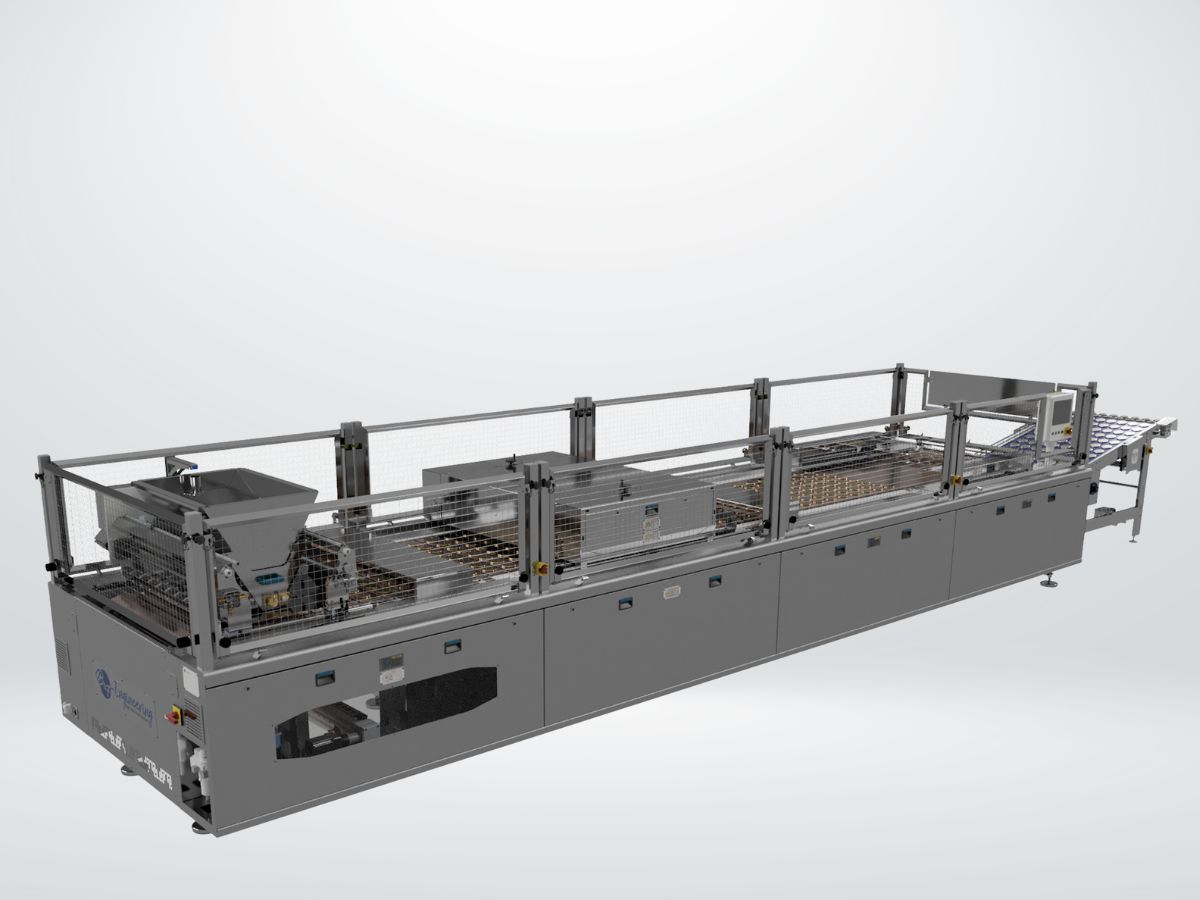
For specifications and configuration options on a fully modular line built around all of these criteria, see B&F Engineering’s Pancakes & Sandwich Pancakes Production Line.
Frequently Asked Questions
Conclusion: Build the Line Around the Product, Not the Other Way Around
The biggest mistake snack manufacturers make when investing in industrial pancake production lines is buying capacity first and figuring out the product mix afterwards. The better order is the reverse: define the SKUs, the markets, and the three-year roadmap, then design a line — modular, automated, precise — that grows with the business.
Whether the goal is a high-throughput fully automatic pancake machine running a single SKU at 14,000 pieces per hour, a precise dosing pancake machine for premium filled formats, or a complete dorayaki production plant with sealing and printing, the underlying engineering choices are what determine product quality, cost per unit, and how fast new products can launch.
If you’re scoping a project — from feasibility through R&D, layout, commissioning, and after-sales — talk to the B&F Engineering team. Sixteen years of food machinery experience, CE-certified design, and modular architecture mean your line can be specified once and expanded as your market grows.
Pancakes & Sandwich Pancakes Production Line
Modern snack trends demand creativity, consistency, and speed—qualities that define B&F Engineering’s Pancake Production Lines. Whether you’re producing single-layer pancakes or filled sandwich pancakes (like dorayaki), our flexible systems are engineered for seamless performance. Ready to transform your production? Let’s build your custom pancake line today.
Contact Us Today
Discuss your project with our engineering team and discover how our machines can optimize your production.