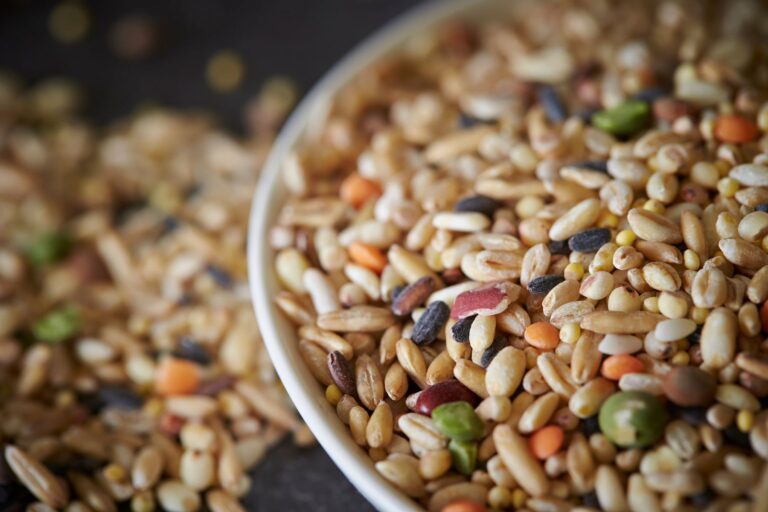
High Pressure Rice Cake Popping Machines: How the Technology Actually Works
The global appetite for clean-label, gluten-free, low-calorie snacks has turned what used to be a niche product into a strategic SKU for snack manufacturers worldwide. Behind every crunchy puffed cake on a supermarket shelf sits a piece of engineering that most consumers never think about: a high pressure rice cake popping machine. This guide walks through how the technology works, what specs matter, how the popper integrates with the rest of the line, and where today’s industrial designs are headed.
If you’re scoping equipment, you’ll also want to read our rice cake machine buyer’s guide for the procurement angle. This article focuses on the technology itself.
What Are High Pressure Rice Cake Popping Machines?
A high pressure rice cake popping machine is an industrial press that converts whole, moisture-conditioned grains into bonded, puffed cakes using only heat and pressure — no oil, no extrusion, no chemical leavening. Whole rice (or other grains) is loaded into a heated mould cavity. A piston or upper die compresses the grain against a heated lower plate. Within seconds, the combination of high temperature and elevated pressure flashes internal moisture into vapour. When the pressure is released, that vapour expands violently, puffing each grain to several times its original volume. The expanded grains bond at the surface and exit the mould as a single, cohesive cake.
Three things distinguish industrial popping from artisanal or kitchen-scale equivalents:
- Tightly controlled process parameters (pressure, temperature, dwell time) that hold tolerance batch after batch
- Multi-cavity or multi-head architectures that scale throughput from a few thousand to tens of thousands of cakes per hour
- Integration with upstream grain handling and downstream cooling, flavouring, coating, and packaging systems
The Science of Popping: Heat, Pressure, and Moisture
The whole process is a controlled phase change. Conditioned grain enters the popping chamber at a specific moisture content — typically around 14–18% — and the chamber is heated and pressurised to a precise setpoint. A widely cited industrial range is around 200–230 °C for chamber temperature and 1.3–1.5 MPa for forming pressure, with a dwell time in the range of 6–10 seconds for fast cycles up to about 75–85 seconds for denser, slower-cycling cakes. The exact recipe depends on the grain, the target density, and the cake thickness.
When the pressure releases, water inside each grain — now superheated past its normal boiling point — expands explosively. The starch matrix within the grain inflates, sets, and bonds with neighbouring grains. The result is a low-density, structurally rigid cake with a distinctive porous interior.
A few practical implications follow from the physics:
- Moisture conditioning matters as much as the popper itself. Too dry, and the grains won’t expand fully. Too wet, and they steam instead of pop, producing a dense, gummy texture.
- Pressure release timing is critical. Release too slowly and cakes lose loft; release too quickly and surface integrity suffers.
- Mould temperature uniformity drives shape consistency. Cold spots cause uneven expansion and cracked edges.
This is why modern poppers are designed around a tightly engineered thermal mass — usually a heated tempered steel mould, often coated with titanium nitride (TiN) for release performance — and a servo-controlled pressing cycle that holds dwell time within tens of milliseconds of target.
Industrial Rice Cake Machines: From Single-Head Units to Multi-Cavity Lines
Industrial rice cake machines scale by adding cavities, heads, or parallel popping units rather than by increasing the cycle speed of any single mould. The physics of popping sets a hard floor on dwell time, so throughput is fundamentally a question of how many simultaneous cakes the line can produce.
Three broad architectures exist in commercial use:
- Single-cavity benchtop or pilot machines — typically 200–600 pieces per hour. Used for R&D, small-batch artisan production, and recipe development.
- Multi-cavity production poppers — usually 2,000–10,000 pieces per hour from a single line, with two or more synchronised cavities and a continuous in-feed system.
- Multi-line installations — large factories run multiple parallel poppers fed from a shared grain handling and conditioning system, pushing throughput well beyond what any single machine delivers.
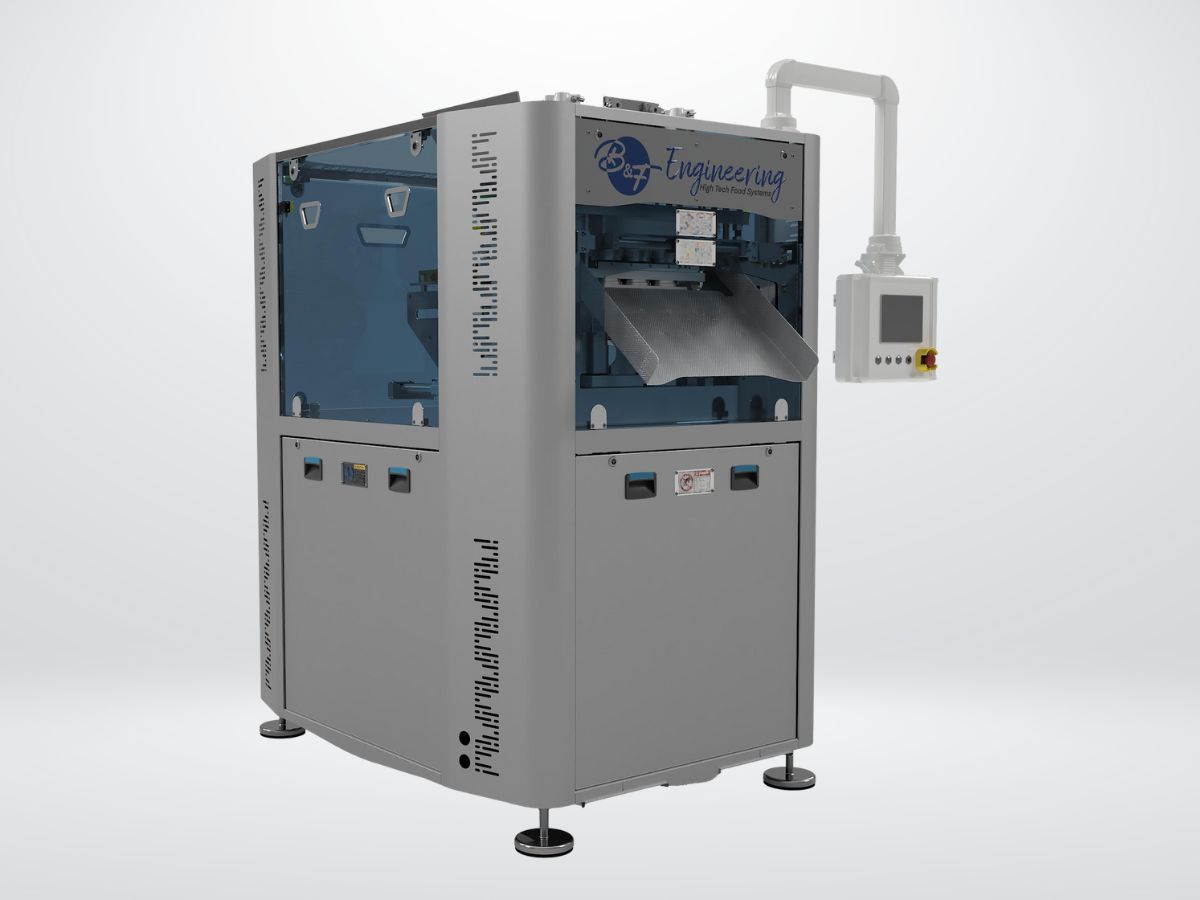
B&F Engineering’s Rice Cakes & Rice Cake Lines sit in the 2,000–10,000 cakes/hour band, designed as modular units that integrate with cooling, coating, and packaging systems. For a fuller layout discussion — grain silos, conditioning, and downstream sections — see Designing a Complete Rice Cake Production Line.
Whole Grain Popped Cake Machines: Beyond Rice
Despite the name, modern whole grain popped cake machines handle far more than rice. Any whole grain or pulse with the right starch matrix and moisture profile can be popped under pressure. In commercial use today:
- Brown and white rice — the classic substrates; both pop well, with brown rice giving a nuttier flavour and slightly denser texture
- Corn (maize) — produces a light, slightly sweeter cake with bigger expanded cells
- Whole-grain wheat and bulgur — common in multigrain blends
- Buckwheat — a gluten-free favourite for premium and health-segment products
- Quinoa — small grains, requires careful pressure and temperature tuning, premium positioning
- Lentils and chickpeas — increasingly popular for high-protein cakes
- Spelt and barley — niche but growing in European markets
Each grain has its own popping window. Quinoa pops best at lower pressures than rice; lentils need higher temperatures and longer dwells; corn loses structure if over-processed. A well-specified popper offers adjustable mould pressure, temperature zones, and cycle time — controllable through PLC recipes — so a single line can run multiple grain profiles without mechanical changeover.
For deeper formulation guidance on multigrain and high-protein blends, see our multigrain rice cake formulation guide.
Rice Cake Production Line Automation: The Popper as a Connected Asset
A standalone popping machine is only half the story. Rice cake production line automation turns the popper into a connected node in a wider system that touches grain conditioning, cooling, flavouring, metal detection, and packaging.
At the popper itself, automation typically covers:
- Servo-driven press cycles with closed-loop position and pressure control, holding dwell time and forming force to tight tolerance
- Recipe management on a central HMI, storing parameter sets per SKU (pressure, temperature, cycle time, mould geometry)
- Real-time process logging for batch-level traceability, including alarms, deviations, and corrective actions
- Line interlocks that synchronise the popper with upstream grain dosing and downstream cooling and flavouring
For the broader picture — quality control, audit-readiness, OEE tracking, and remote support across the whole line — read our companion piece on automation and quality control in rice cake production lines.
The point worth highlighting here: a popping machine that lacks recipe memory or process logging will under-perform a “less powerful” machine that has both. In a multi-SKU factory, the difference between repeatable, audit-ready production and trial-and-error reformulation each shift is enormous.
Rice Cake Flavoring and Coating Systems
Plain popped cakes have a healthy-but-bland reputation. Most commercial growth in the category over the last decade has come from flavoured, seasoned, and coated formats. Rice cake flavoring and coating systems are now considered an integral part of any modern popping line.
The main approaches:
- Oil and dry seasoning drums. A rotating drum with synchronised oil-spray nozzles at the inlet and dry-seasoning vibratory feeders at the outlet. Cakes tumble gently through; oil acts as the binder for the powder. Flavours range from salt and herbs to BBQ, sour cream, ranch, paprika, and sweet variants.
- Slurry coating. Pre-mixed liquid + dry seasoning is sprayed in a fine, even pattern. Useful when uniform deep flavour is needed and dry application alone won’t penetrate.
- Electrostatic coating. Charged seasoning particles are attracted to oppositely charged cakes, dramatically improving adhesion and reducing seasoning waste — typical savings of 15–45% versus conventional drum coating.
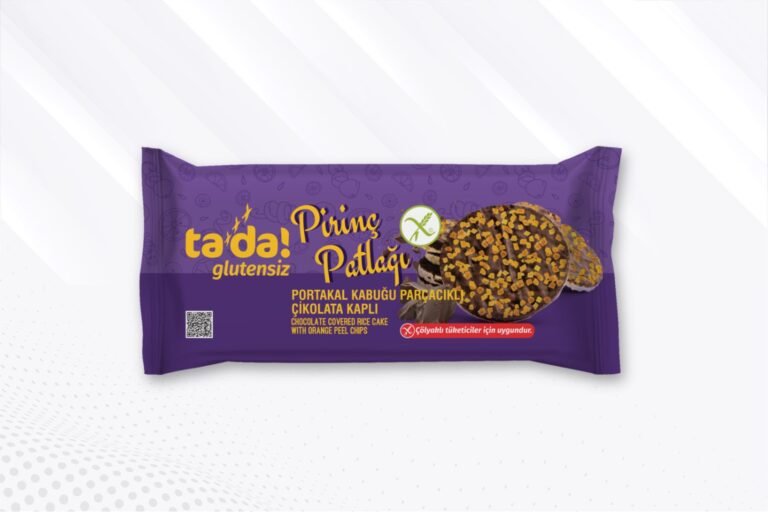
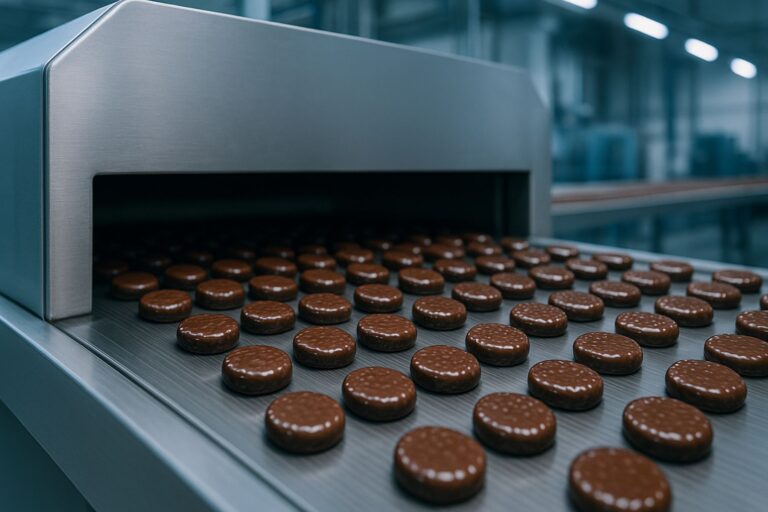
- Chocolate and yoghurt enrobing. A separate enrober station coats the cake in tempered chocolate or compound coatings, followed by a cooling tunnel for setting. For the engineering detail on this stage, see our piece on chocolate-coated rice cakes: enrobing and cooling line design.
A few engineering notes worth keeping in mind:
- The popping line and the flavour/coating line should run on synchronised speeds. Mismatched throughput causes either pile-ups at the drum or starved feed downstream.
- Hygienic design matters more for flavour systems than almost any other line section. Allergen segregation, fast change-over between flavours, and full washdown capability separate good systems from problematic ones.
- A hard surface and uniform diameter on the popped cake make every coating step easier — another reason precise popper control pays back across the whole line.
Materials, Hygiene, and Compliance
Industrial rice cake popping equipment lives in a hot, humid, particulate-rich environment. The material specification matters:
- Product-contact surfaces built in AISI 304 or 304L stainless steel as standard for corrosion resistance, hygienic cleanability, and food-safety compliance
- Mould bodies typically tempered steel for thermal mass and dimensional stability, often coated with titanium nitride (TiN) or similar release coatings to reduce fouling and extend mould life
- Hygienic design with smooth surfaces, no dead zones, and accessible chambers for cleaning between flavour changeovers
- CE certification for European markets; HACCP-compatible design as a baseline expectation
- Energy-efficient heating with multi-zone insulation reduces consumption and improves thermal stability across long shifts
Buyers who skip the materials conversation usually pay for it later in maintenance, downtime, and product reject rates.
How to Specify a High Pressure Rice Cake Popping Machine
When evaluating a popper for a specific project, focus the technical conversation on these specifications:
- Maximum forming pressure (MPa) and pressure-control resolution
- Temperature range and zone count of the heated mould plates
- Cycle time and minimum dwell tolerance
- Cavity count and mould geometry options (round, mini-round, square, custom)
- Mould changeover time between formats
- Capacity in cakes/hour, both nominal and sustained over an 8-hour shift
- Grain compatibility — which grains, blends, and pellets the machine is validated for
- Automation features — PLC make and model, HMI capabilities, recipe storage, data logging, OEE compatibility
- Hygienic design and cleanability — washdown rating, CIP/semi-CIP support, allergen-segregation features
- Integration interfaces for upstream grain handling and downstream cooling, flavouring, and packaging
- Service and parts logistics — local technical support, spare parts availability, remote diagnostics
A line that wins on paper but takes hours to switch between two recipes will lose money in any factory running multiple SKUs.
Frequently Asked Questions
Conclusion: The Popper Sets the Ceiling for Everything Downstream
A rice cake line is only as good as the cakes coming out of the popping section. Diameter, density, surface uniformity, and edge integrity all originate at the popper — and every flavour, coating, and packaging step downstream inherits whatever variation the popper produces.
That’s why the technology behind high pressure rice cake popping machines matters more than the spec sheet usually suggests. Tight pressure and temperature control, well-engineered mould materials, recipe-based automation, and clean integration with rice cake flavoring and coating systems are what separate a line that hits retail-grade consistency from one that struggles with reject rates.
Whether you’re building a new line for classic white rice cakes, a multigrain platform that needs whole grain popped cake machines with broad recipe flexibility, or expanding into chocolate-coated and seasoned premium SKUs, the popping section is where the engineering conversation should start.
To scope a project — from R&D and recipe development through layout, commissioning, and after-sales support — talk to the B&F Engineering team. CE-certified design, modular architecture, and 16 years of food machinery experience give you a popping line that’s specified once and grows with your product portfolio.
Rice Cakes & Rice cake Lines
Produce traditional or trendy rice cakes with maximum flexibility and precision. From mini bites to chocolate-coated snacks, our systems adapt to every market demand.
Contact Us Today
Discuss your project with our engineering team and discover how our machines can optimize your production.