Introduction Beyond Just “Making It Cold”
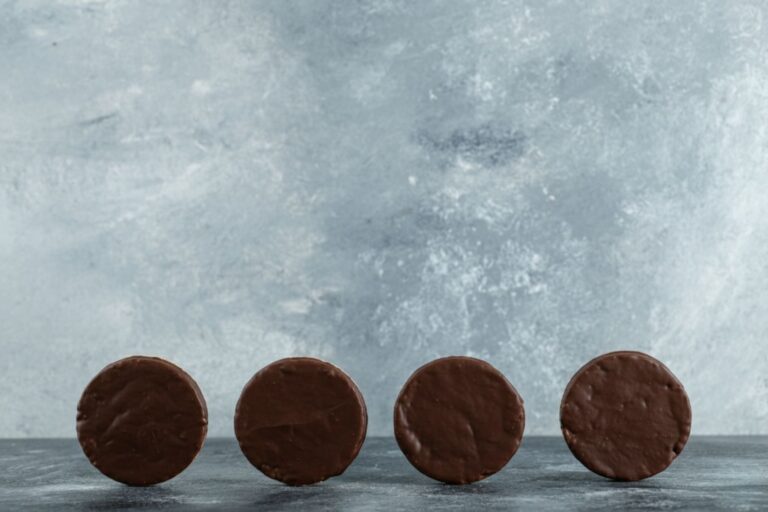
In chocolate enrobing and bakery production, cooling is often treated as a supporting step-something that simply happens at the end of the line. In reality, the cooling tunnel is one of the key determinants of product quality, line efficiency and shelf-life stability.
When temperature, air flow and belt design are optimized, manufacturers achieve glossy coatings, consistent texture and fewer rejects.
This is especially important for high-throughput lines where thousands of bars, biscuits or coated rice cakes pass through the tunnel every hour.
How Cooling Tunnels Perfect Chocolate Enrobing
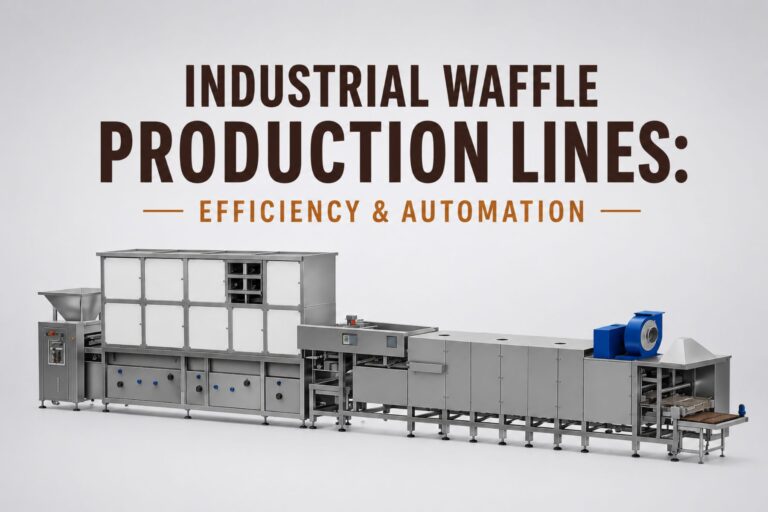
A modern enrobing system and a well-designed cooling tunnel work hand in hand:
- Setting the chocolate layer without bloom or streaks
- Ensuring controlled crystallization of cocoa butter
- Preventing deformation or cracking in delicate bakery bases
- Maintaining throughput without forcing operators to slow down the line speed.
When cooling is uneven or too aggressive, you may see common quality issues:
o Greyish fat bloom on the surface
o Hairline cracks in the coating
o Soft, unstable centers in filled products
o Products sticking to the belt or each other
A tunnel optimized for your product dimensions, belt width and line capacity minimizes these risks and protects your brand image.
Selecting Belt Width and Capacity for Your Snack Range
Every snack manufacturer’s portfolio is different. Some focus on compact biscuits and mini snack bars; others produce large-layer cakes or trays of coated rice cakes. For this reason, cooling tunnels are typically offered with multiple belt widths—for example, from 500 mm up to 2000 mm—so the system can be matched to your current and future SKUs.
Choosing the right configuration involves:
- Product size and layout: single lane vs. multi-lane
- Line capacity: how many pieces per hour the upstream enrober can deliver
- Floor space: the available length and width in your factory
- Future expansion plans: additional SKUs, different coating thicknesses, new packaging requirements
An accurately sized tunnel allows you to maintain a stable cooling curve without unnecessary energy consumption or extended line length.
Hygienic Cooling Tunnel Design and Easy Cleaning
Cooling tunnels operate continuously and handle products that are often highly sensitive to contamination. That’s why the best designs focus on:
- Food-grade materials in all product-contact and air-flow areas
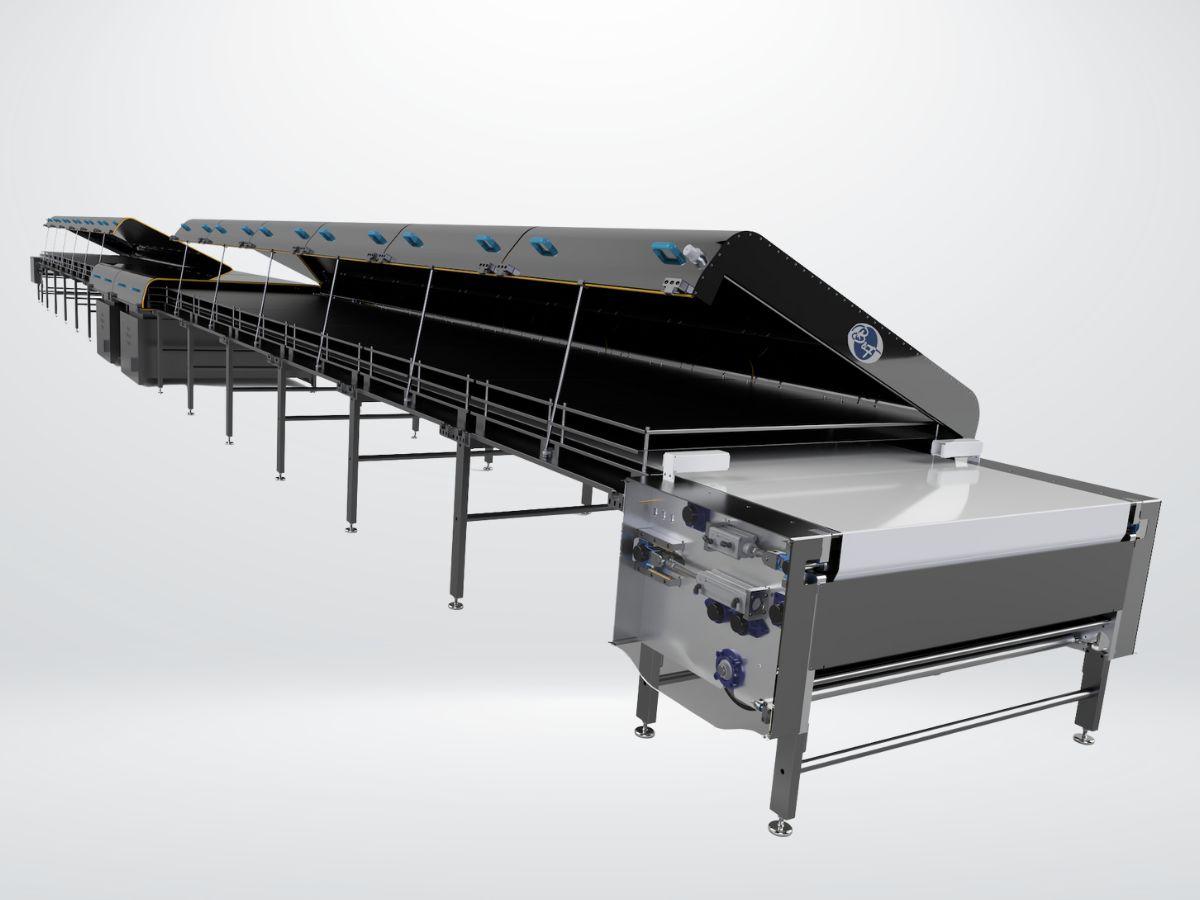
- Easy access covers (e.g., transparent lids with gas struts) for visual inspection
- Smooth, cleanable surfaces that avoid product buildup
- Modular sections that can be opened for maintenance without long downtimes
For manufacturers, this means two advantages:
- Consistent food safety: less risk of foreign material or microbial growth
- Higher uptime: faster cleaning and shorter maintenance stops
As global retailers and brand owners tighten audit requirements, hygienic design in
cooling tunnels becomes a competitive advantage rather than a “nice-to-have”.
Integrating Cooling Tunnels with Enrobers Ovens and Packaging
Cooling tunnels rarely stand alone. They are normally integrated:
- Directly after enrober units coating biscuits, cereals, rice cakes or bars
- After baking ovens, where hot products need to be stabilized before packaging
- In front of packaging machines, which often have strict product temperature
- limits.
A well-planned line layout ensures:
- Smooth product transfer without tipping or overlap
- Balanced line speeds between enrobing, cooling and packing
- Minimal product handling and operator intervention
With the right engineering partner, cooling tunnels can be tailored to your process flow—
from the belt height and infeed guides to downstream accumulation tables.
B&F Engineering Support for Cooling and Enrobing Lines
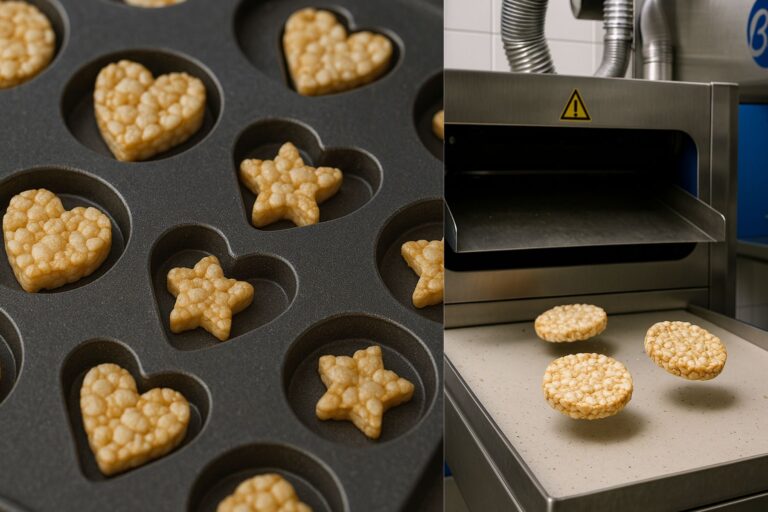
B&F Engineering designs cooling tunnels and enrober units as part of integrated snack and bakery lines, including pancakes, waffles, rice cakes and coated products. Manufacturers benefit from:
- Multiple belt width options (e.g. 500–2000 mm) for different product families
- Hygienic design with easy-access covers for inspection and cleaning
- Compatibility with both compound and real chocolate in enrober units
- Engineering support for line layout, automation and R&D trials
Conclusion Cooling Tunnels as Quality and Efficiency Drivers
For chocolate-coated snacks and baked goods, a cooling tunnel is more than a “cold box”—it is a quality, efficiency and food-safety enabler. When matched properly to your products and integrated with enrobers and ovens, it protects your brand promise at
industrial scale.
Thinking about upgrading your cooling section or planning a new coated product? Partner with B&F Engineering to design a cooling tunnel that fits your line capacity, factory layout and product portfolio.
Cooling Tunnel
Designed to ensure optimal cooling in high-throughput environments, our Cooling Tunnels offer reliable performance, hygienic operation, and easy integration into existing bakery and confectionery lines.
Contact Us Today
Discuss your project with our engineering team and discover how our machines can optimize your production.