Multigrain and High-Protein Rice Cakes: Formulation Challenges and Process Solutions
As consumers demand more fiber, more protein and more variety, plain white rice cakes are no longer enough. Brands are launching multigrain and high-protein rice cakes made with brown rice, quinoa, buckwheat, lentils and added proteins.
However, these recipes behave very differently on industrial lines. Without the right process control, they can cause breakage, sticking or irregular popping.
1. Understanding Grain and Protein Behavior
Classic Japonica rice offers:
- High starch content
- Strong binding
- Predictable popping performance
When you introduce:
- Brown rice and whole grains – more fiber, lower starch
- Seeds and inclusions – fat and oil that weaken structure
- Added protein powders – changing water absorption and elasticity
you must adapt:
- Moisture content
- Blend ratios
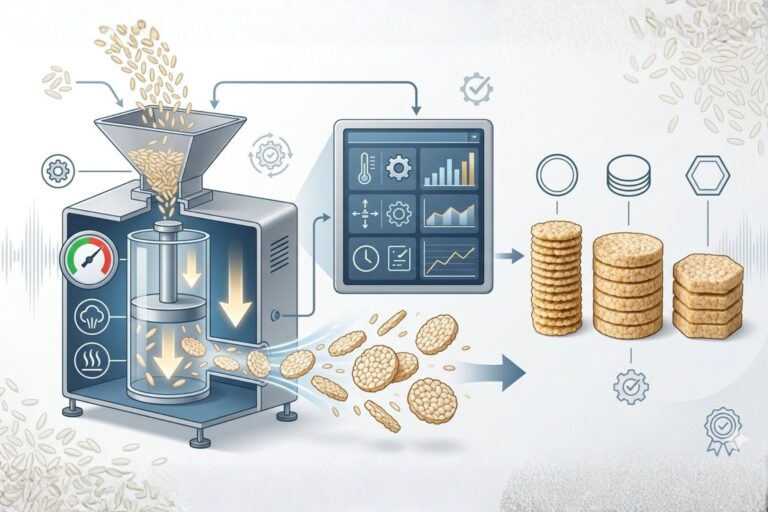
- Popping parameters (temperature, pressure, time)
2. Key Formulation Tips
From B&F Engineering’s multigrain projects, several best practices emerge:
- Use a strong base grain (e.g. Japonica or similar) for binding.
- Keep fatty inclusions (nuts, seeds) within controlled limits.
- Add lecithin or similar aids to improve homogeneity and reduce brittleness.
- Adjust particle size distribution to avoid segregation and uneven mould filling.
For high-protein recipes:
- Balance protein content with starch to maintain expansion.
- Consider hydrocolloids or binders to strengthen cell structure.
- Test different hydration and tempering times for uniform popping.
3. Process Adjustments on the Rice Cake Line
Multigrain and high-protein blends often require:
- Slightly different pressing pressure to get full mould fill.
- Modified popping temperature profiles to prevent burning.
- Adapted cycle times to allow enough heat transfer into denser grains.
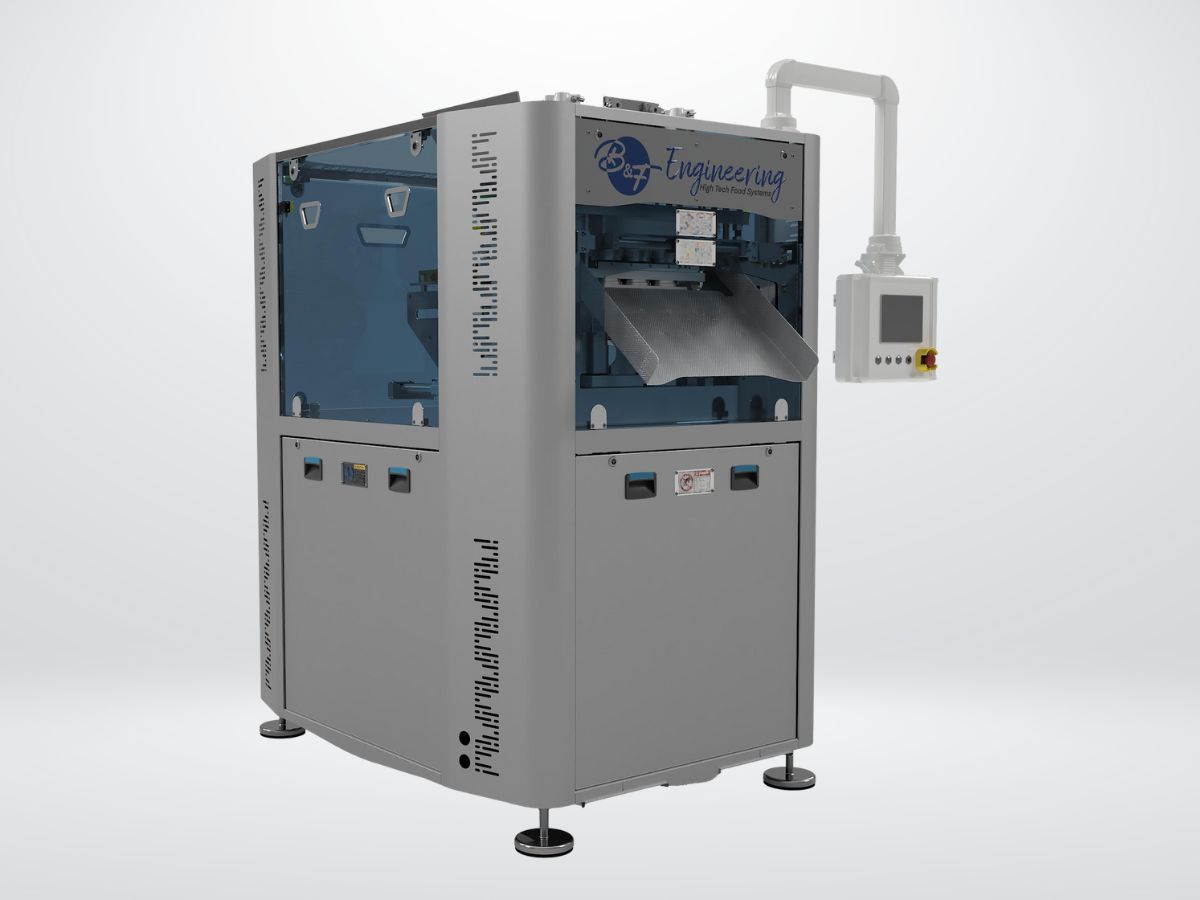
B&F’s rice cake lines use adjustable molding pressure and recipe memory so each formula can run with its own optimized settings—without manual re-tuning every time.
4. Maintaining Line Efficiency and Product Strength
One of the main risks with multigrain and high-protein cakes is higher breakage, especially:
- During demoulding
- In transfer to cooling and packaging
- In shipping and retail handling
To manage this:
- Engineers review mould geometry and surface finish.
- Cooling sections are tuned to stabilize structure before aggressive handling.
- Packaging systems are calibrated to minimize impact and stress.
Pilot trials and demo production at B&F’s facilities help fine-tune these elements before full-scale investment.
5. Positioning Multigrain and High-Protein Cakes in the Market
With the right formulation and process, multigrain and high-protein rice cakes offer:
- Strong nutritional claims (fiber, protein, whole grains)
- Cross-over potential into sports nutrition and functional snacks
- Great synergy with flavorings, coatings and sandwich formats
Flexible lines—like B&F’s 2,000–10,000 pcs/h systems—let you produce both standard and advanced recipes on the same platform, maximizing ROI.
Conclusion
Multigrain and high-protein rice cakes are technically demanding but commercially rewarding. By understanding ingredient behavior and tuning line parameters, manufacturers can deliver nutritious, durable and appealing products without sacrificing efficiency.
Rice Cakes & Rice cake Lines
Produce traditional or trendy rice cakes with maximum flexibility and precision. From mini bites to chocolate-coated snacks, our systems adapt to every market demand.
Contact Us Today
Discuss your project with our engineering team and discover how our machines can optimize your production.