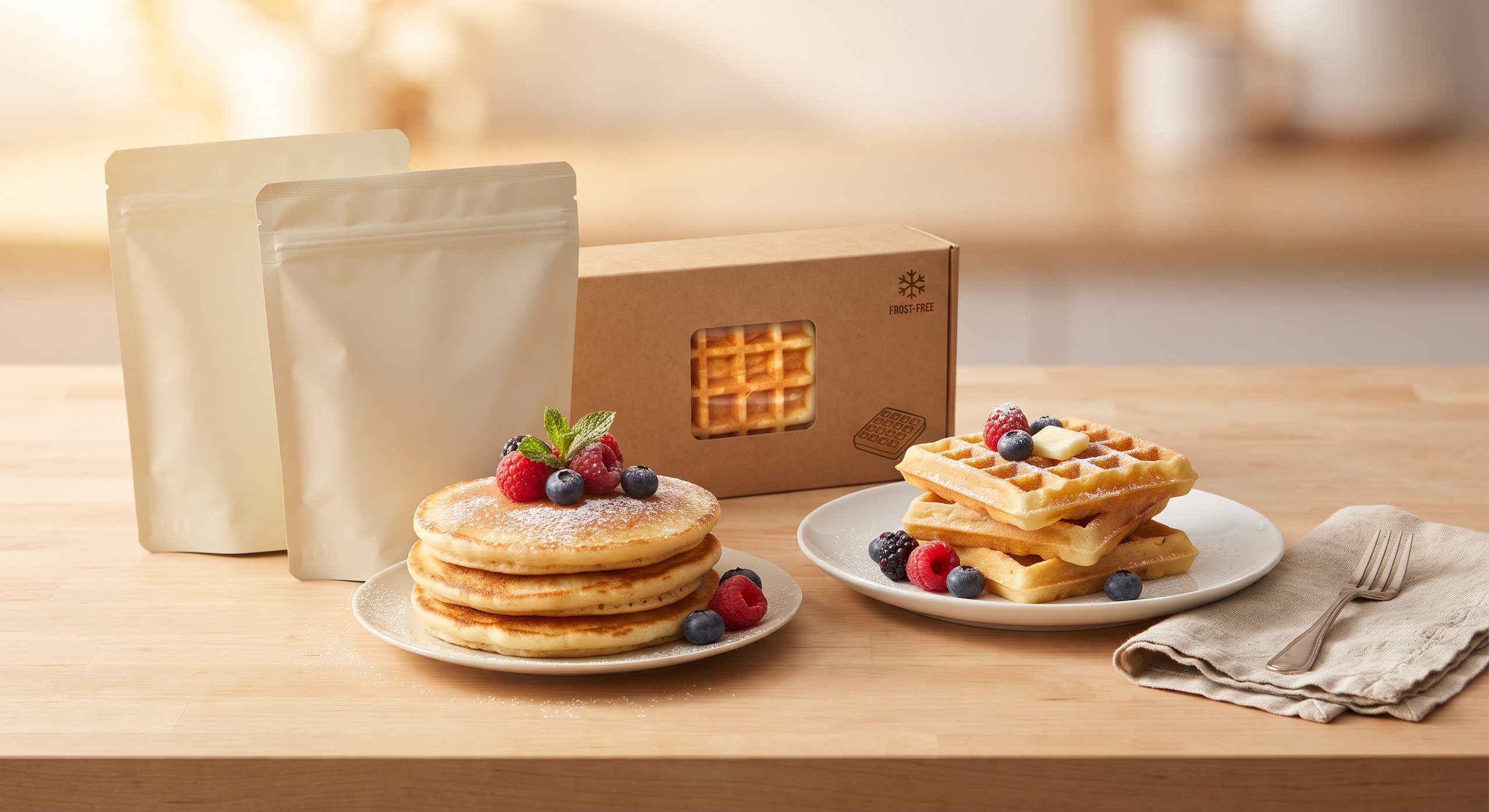
Frozen waffles and pancakes sit in a very large part of the breakfast aisle in North America and Europe, and foodservice buyers use them in hotels, cafés and catering. For a manufacturer the attraction is clear: a frozen product has a long shelf life, travels well and lets you ship to distant markets without preservatives.
The difficulty is that the quality of a frozen waffle is decided long before the freezer. It depends on how the batter is built, how the product is baked, how it is cooled, how fast it freezes, and how it is packed and stored. This guide shows how those stages connect, so you can specify a line that delivers a product that still tastes good after months in a freezer and a few minutes in a toaster.
Why the whole line matters, not only the freezer
Many projects start with the question “which freezer should we buy?” A better question is “what must the product look like when it enters the freezer?” If waffles arrive warm, wet or stuck together, the best freezer in the world will not fix the result. The line has to be designed as one system, from batter to cold store.
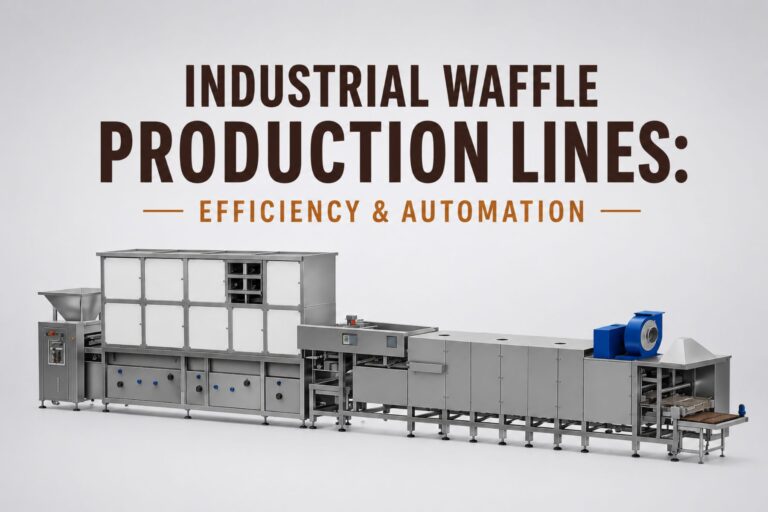
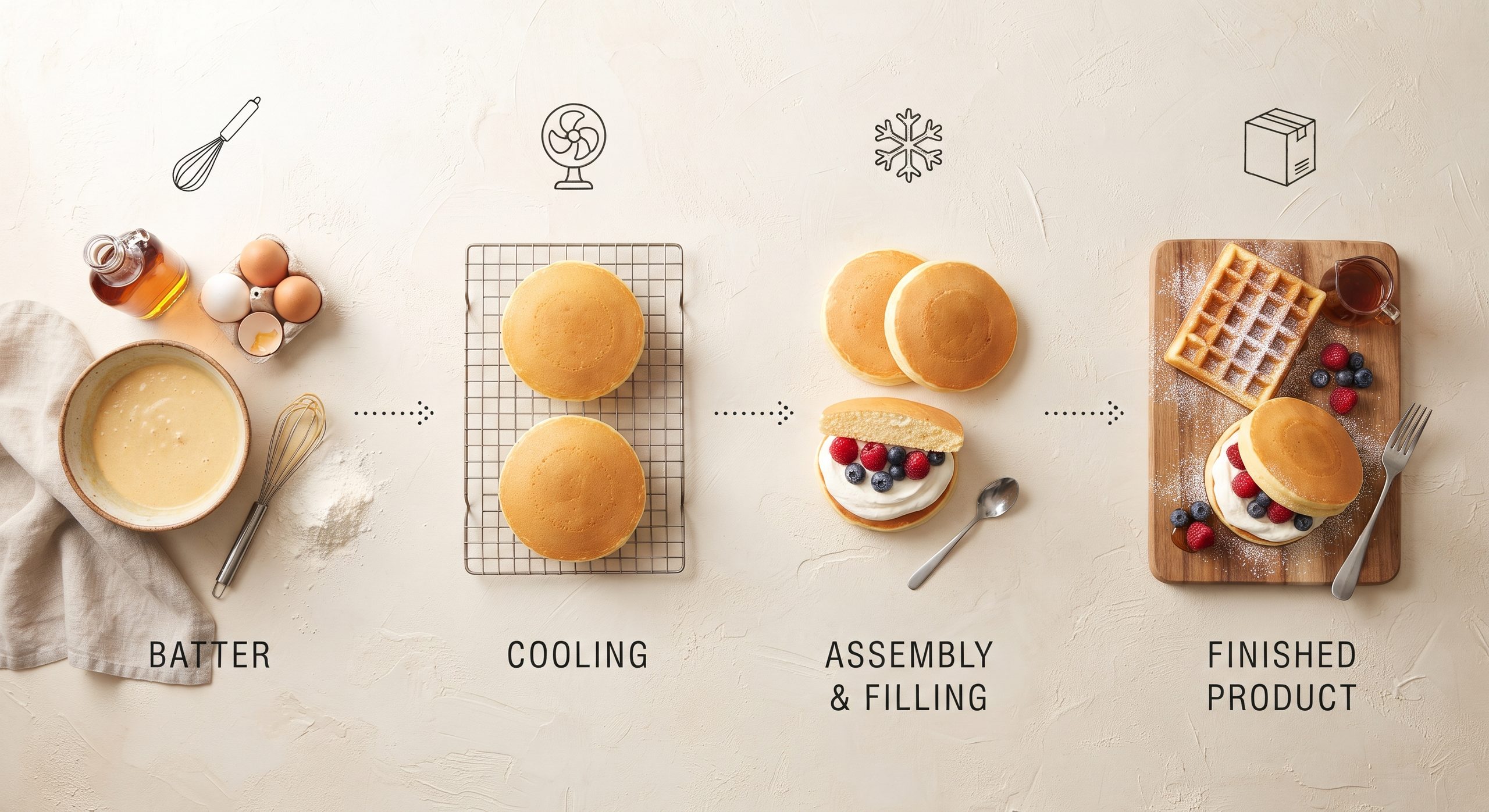
A typical frozen line has these sections:
- Batter preparation and depositing
- Baking
- Cooling
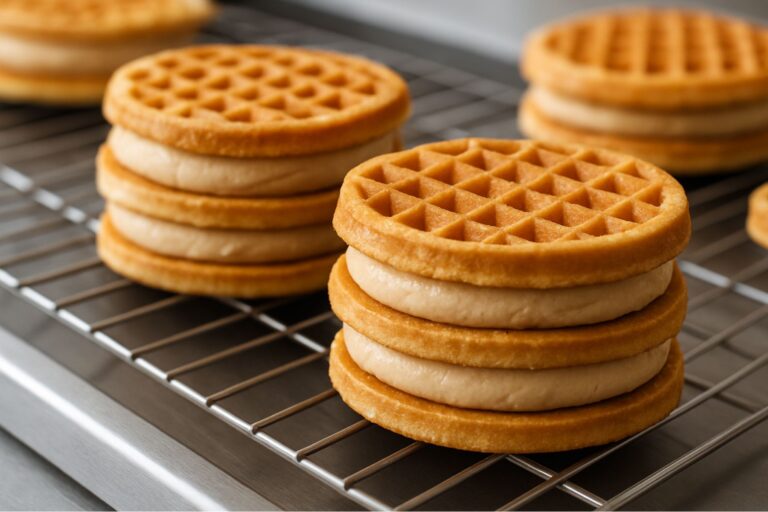
- Filling and sandwiching (for filled products)
- Freezing
- Inspection and packing
- Palletizing and cold storage
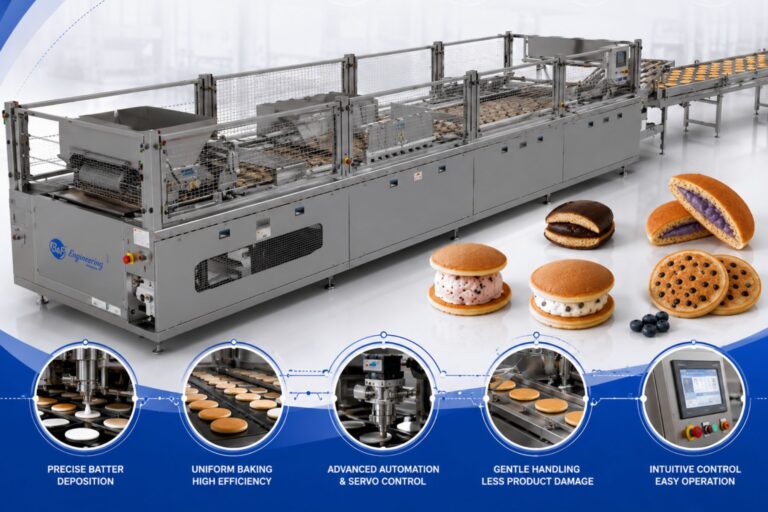
B&F Engineering waffle lines run from 4,000 to 40,000 waffles per hour, and pancake lines make 5,000 to 14,000 sandwich pancakes per hour, with single pancake capacity at double that figure. Whatever the capacity, the freezing and packing stages must be sized to match the baking section, or the oven will wait for the freezer.
Stage 1: Formulate for the freezer
A recipe that works for a fresh waffle may fail after freezing. Ice crystals form inside the product, and when it thaws, water can move and leave the texture soggy, rubbery or dry. During freezer storage, starch recrystallizes and crumbs go stale even at low temperature.
Formulators deal with this in several ways:
- Starches and gums that bind water and keep it from migrating
- Fats and emulsifiers that keep the crumb soft and help the product reheat well
- Sugars and humectants that lower the freezing point of the water phase
- Leavening choices that give a stable structure through the freeze-thaw cycle
If you make filled waffles or sandwich pancakes, the filling must also tolerate freezing. Some creams separate or weep water when they thaw. Fruit fillings may become runny. Test the filling and the waffle together, not separately. Our R&D laboratory can run recipe development and pilot testing so you see the result before you buy equipment.
Stage 2: Bake to the right condition
Baking time, temperature and moisture loss set the structure that carries through the freezer. If the waffle is underbaked, too much water stays in the product and freezes into large crystals. If it is overbaked, it dries out and tastes like cardboard after toasting.
Waffle lines with adjustable baking time and smart temperature management allow you to find the best balance for each recipe. The pancake line from B&F has a baking time of 100 to 120 seconds, with adjustable griddle speed and top heating for fine tuning. The best way to find the right profile for your product is to bake and freeze real samples, then reheat them the way your customer will.
Stage 3: Cool before you freeze
Cooling is the stage that gets underestimated most often. A warm waffle that enters a freezer does three things you do not want:
- It adds heat load, so the freezer needs more power or runs slower.
- It releases moisture that turns into frost on the freezer coils and on the product.
- It softens or deforms as it freezes unevenly.
A cooling tunnel brings the waffles down to a controlled temperature before the next step. B&F cooling tunnels have adjustable cooling capacity, conveyor widths from 500 mm to 2,000 mm, AISI 304 stainless steel construction and optional UV units that reduce surface microbial load. Matching the tunnel length and belt width to your output keeps the product moving at the speed of the oven.
For sandwich products, cooling also protects the filling. Placing a cream on a hot waffle thins it and makes it leak. Cool first, fill second.
Stage 4: Filling and sandwiching
Filled frozen waffles and pancakes need accurate dosing. Too much filling squeezes out at the edges and sticks to neighbors in the freezer. Too little disappoints the consumer. A servo-driven filling system keeps weight steady, and a controlled sandwiching unit aligns and presses the halves.
Look at our article on precise filling and quality control in sandwich waffle production for more on dosing accuracy.
Stage 5: Freezing
The freezing stage turns a cooled product into a solid that is safe to store and ship. Two parameters matter most:
- Freezing speed. Fast freezing forms small ice crystals that cause less damage to the structure. Slow freezing forms large crystals and a worse texture.
- Core temperature at exit. Most frozen bakery products are stored at -18 °C or colder, so the product should leave the freezer close to that temperature, not just frozen on the surface.
Industrial freezers for waffles and pancakes are usually spiral or tunnel freezers supplied by specialist manufacturers. When planning the line, the freezer is a separate engineering package whose interface with the cooling tunnel, conveyors and packing line must be designed carefully. This is where layout and process design helps, because it makes sure the conveyors, heights, spacing and utilities fit together before steel is cut.
A simple sizing example
Sizing a freezer starts with product mass flow and residence time. As an illustration only: a line making 10,000 waffles per hour at 35 grams each moves 350 kg of product per hour. If the product needs 30 minutes in the freezer, about 175 kg is inside the freezer at any moment. Your freezer supplier will add allowances for belt loading, product spacing and temperature. The point of the example is that capacity, spacing and residence time are linked, so changing one changes the freezer size.
Stage 6: Packing frozen products
Packing must protect the product against freezer burn, odor transfer and breakage, and it must work at low temperature without condensation problems.
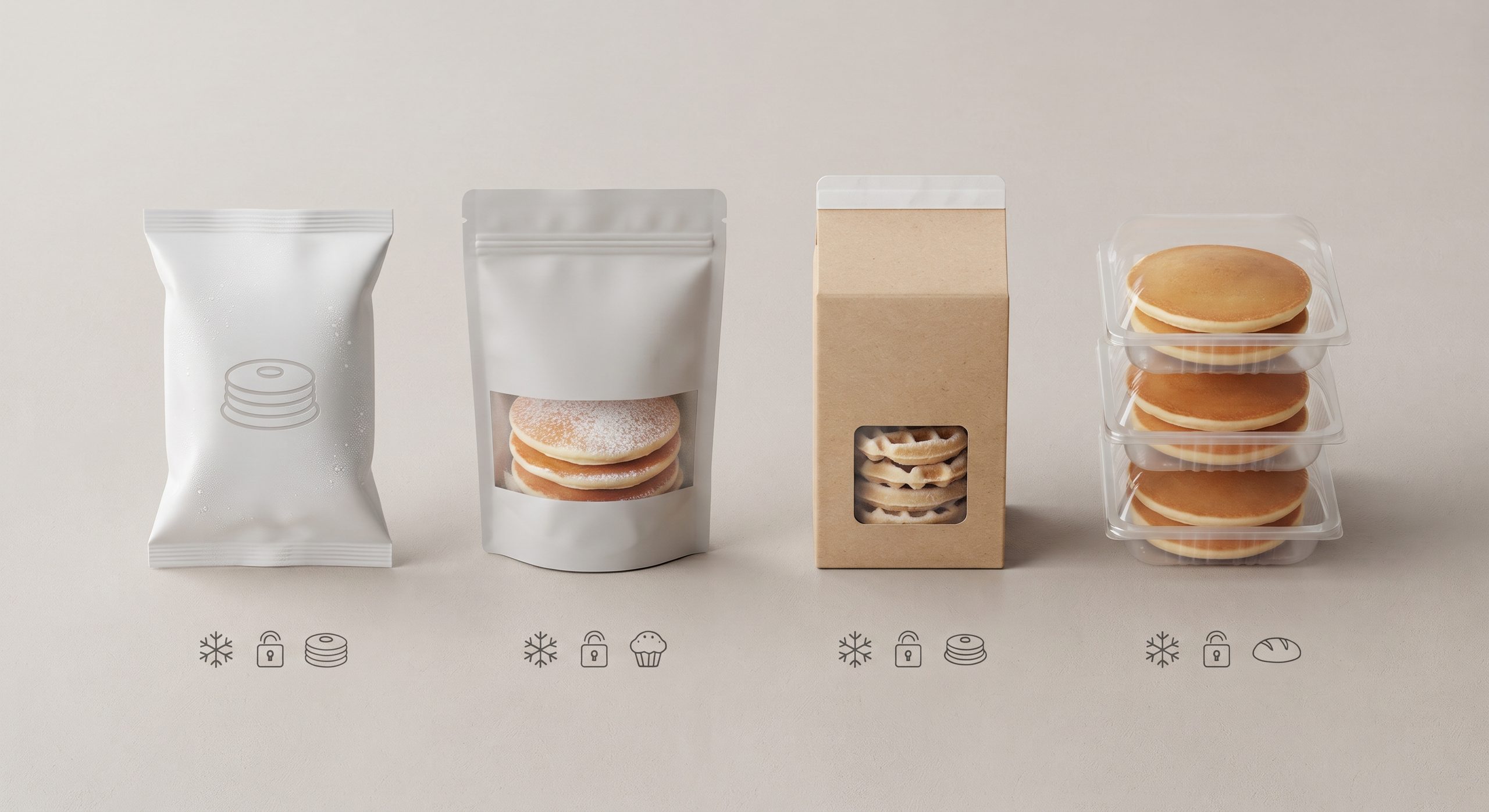
| Pack format | Typical use | Considerations |
|---|---|---|
| Flow pack | Individual waffles or pancakes | Fast, good for retail multipacks |
| Bag with zip or fold | Retail family packs | Count accuracy, film strength at low temperature |
| Carton with inner bag | Retail and foodservice | Extra protection against breakage |
| Bulk case | Foodservice | Layer separation to prevent sticking |
Packing at the end of the freezer means the product is cold and stiff, which can be good for handling and bad for film sealing. Test your film and sealing temperature with product at the real exit temperature. Robotic case packing and palletizing, such as the systems in B&F’s automation solutions, reduce manual contact and speed up the end of the line.
Add metal detection and weight checking before packing, and vision inspection where possible, so defective products never reach the freezer or the carton.
Stage 7: Storage and the cold chain
Frozen shelf life depends on storage temperature stability. Temperature fluctuations cause ice to melt and refreeze, which damages texture and produces frost in the pack. Commercial frozen bakery products often carry shelf lives in the range of several months to a year, but the actual figure must come from your own storage tests with your own recipe and packaging.
Plan cold storage capacity, loading docks and transport with the same care as the production line. A product that is perfect at the factory gate can still arrive damaged if the cold chain breaks.
Shelf life: what you can control
For a frozen waffle or pancake, shelf life depends on:
- Formulation: water binding, fat type, antioxidants where needed
- Process: correct baking, cooling and freezing
- Packaging: barrier film and tight seals
- Storage: constant temperature and limited handling
Because the product is frozen, microbial growth is not the main limit. Quality loss from oxidation, freezer burn, texture change and flavor loss is what ends shelf life. Your tests should check these, not only microbiology. If you need a method, our R&D lab services include shelf-life evaluation and sensory analysis.
Layout and utilities for a frozen line
A freezer is a big machine with specific demands:
- Floor space and ceiling height for spiral or tunnel freezers
- Electrical supply and refrigeration capacity
- Drainage and defrost water handling
- Insulated rooms and doors that cannot be left open
- Separation of cold, ambient and hygienic zones
Plan these with the line. It is common to discover late in a project that the freezer needs more height, more power or a different location than the baking hall can offer. Early layout work avoids that.
Quality checks specific to frozen production
A frozen line needs a few checks that a fresh line does not.
- Core temperature at the freezer exit. Probe a sample of products from different positions on the belt, not only the ones in the middle.
- Stuck or clumped product. Waffles that touch while wet freeze together. Check spacing and belt loading.
- Frost and ice in the pack. Excess frost points to warm product, a leaking pack or temperature swings in storage.
- Toasted and microwaved performance. Test how the product reheats, because that is what the consumer experiences.
- Filling behavior. Cut open filled products after freezing and reheating, and look for leakage, separation or a soggy layer.
Record results by batch, so a complaint months later can be traced to the production conditions.
Choosing between a fresh and a frozen business
Frozen production adds equipment, energy cost and logistics requirements. It also opens doors:
- Longer distances and export markets
- Larger retail and foodservice contracts
- Production planning with less pressure from short shelf life
- Higher volumes per customer
If you are not sure, run a trial. Bake, cool, freeze and test a sample batch, then reheat it in a toaster and a microwave. That is the closest test to a consumer’s kitchen.
Frequently asked questions
What equipment do I need for a frozen waffle production line?
A frozen line needs batter preparation, a baking oven, a cooling tunnel, optional filling and sandwiching, a freezer, inspection and packing equipment, and cold storage. The freezer is usually a separate specialist package that must be matched to the baking capacity.
Why do waffles need to be cooled before freezing?
Warm waffles add heat to the freezer, release moisture as frost and can deform or stick together. A cooling tunnel brings the product to a stable temperature so the freezer works efficiently and the waffles keep their shape.
How long do frozen waffles and pancakes last?
Shelf life depends on recipe, packaging and storage temperature. Frozen bakery products commonly carry shelf lives of several months to a year, but you should confirm the date with storage trials on your own product.
Can the same line make fresh and frozen products?
Yes, if the line is designed for it. The baking and filling sections are the same, and the product either goes to the freezer or straight to packing. Cooling, packaging and layout need to allow both routes.
How do I stop filled pancakes from leaking after freezing?
Use a filling that tolerates freeze-thaw cycles, control the filling weight, cool the pancake before filling and seal the edges. Test finished products after freezing and reheating before you approve the recipe.
Plan your frozen line with B&F
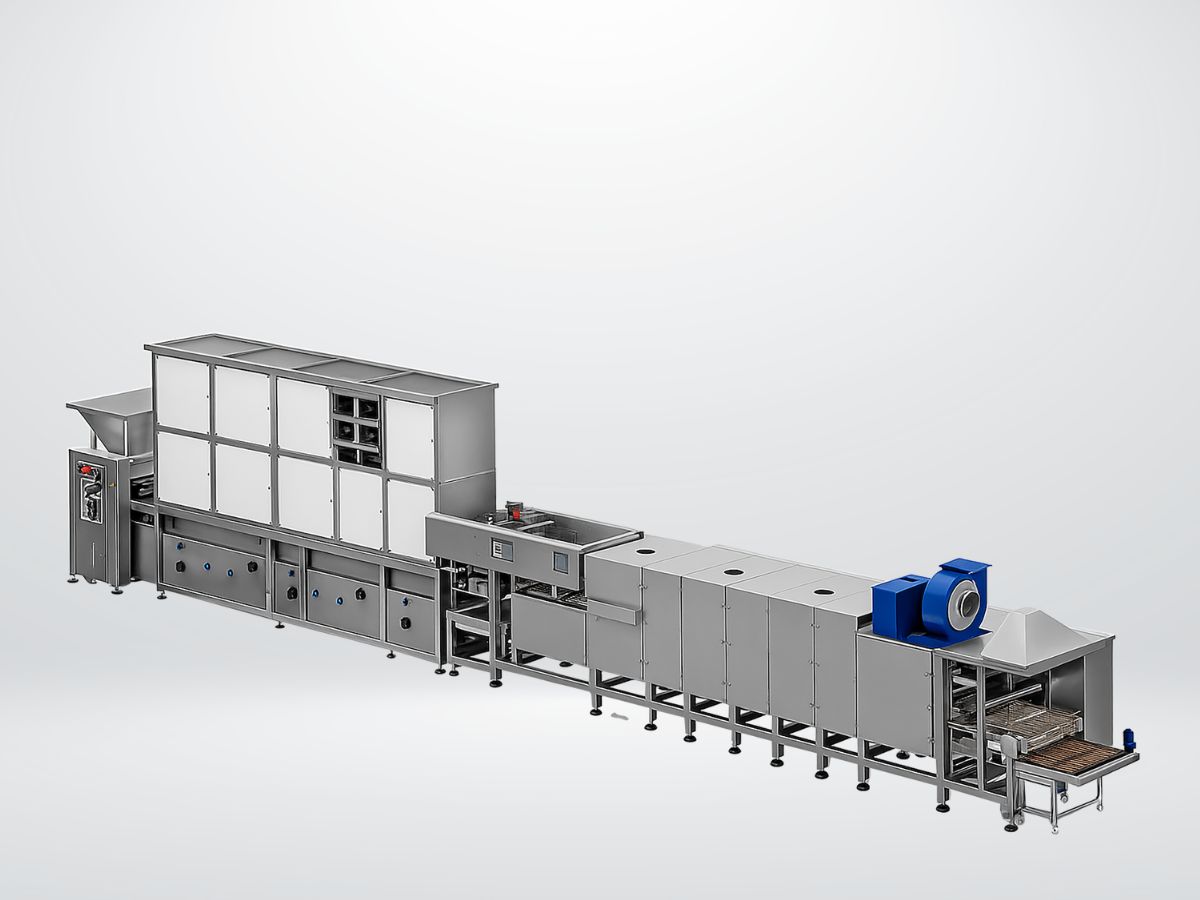
B&F Engineering designs baking, cooling, filling and automation sections as one system and supports your project with recipe development, layout and commissioning. Tell us your products and target output, and we will outline the line. Request a quote for your frozen waffle or pancake line, or read more about the waffle production line and the industrial pancake production line.
Contact Us Today
Discuss your project with our engineering team and discover how our machines can optimize your production.