How Much Does a Rice Cake Machine Cost? Price Factors and ROI (2026)
If you search for a rice cake machine price, you will find a lot of numbers and very little context. A table-top puffing machine and a fully automated 10,000-pieces-per-hour line are both called “rice cake machines”, yet they sit in completely different budget classes. This guide explains what actually moves the price, how to compare quotes fairly, and how to calculate your own payback before you talk to any supplier.
We do not publish a fixed price list, and we explain why below. What we can do is show you the cost logic, so that the quote you receive makes sense and you can see where your money goes.
Why there is no single rice cake machine price
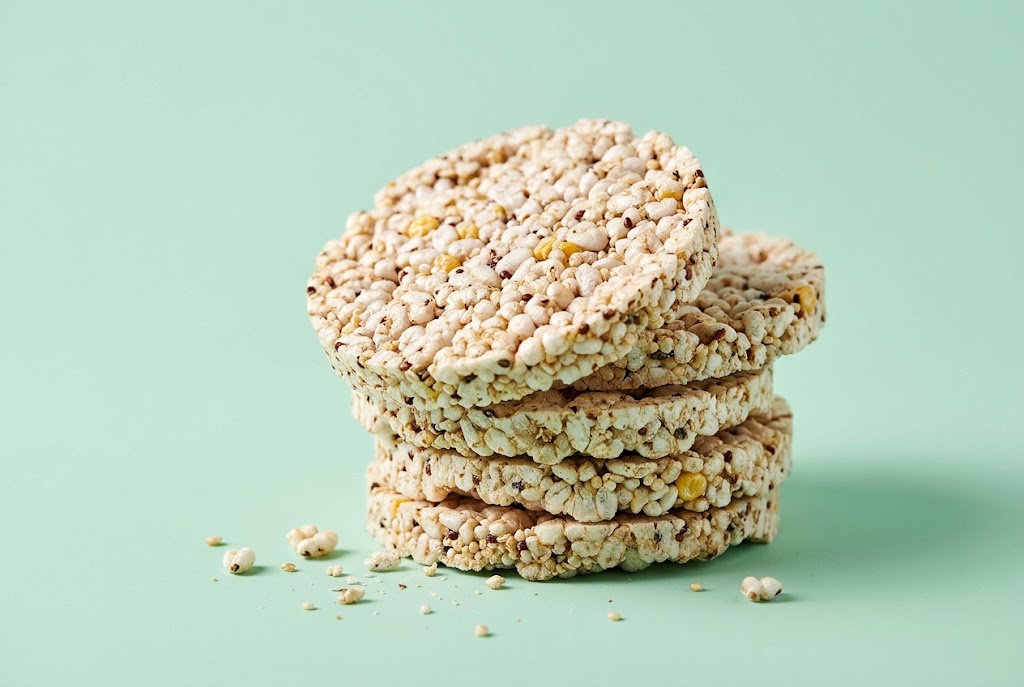
A rice cake machine works by pressing grain into a heated mold. Pressure and temperature build up, the mold opens, and the grain expands into a light, crisp disc. That principle is the same everywhere. What changes the price is how many molds you run, how much of the work is automatic, and what happens to the cake after it leaves the mold.
For reference, B&F Engineering rice cake lines cover a capacity range of 2,000 to 10,000 rice cakes per hour. Between the bottom and the top of that range, the machine itself changes: more mold stations, heavier frames, bigger drives and a different level of controls. Price follows those changes closely, which is why a single “average cost” would mislead you. For a broader look at the buying decision, see our guide on how to choose the right rice cake machine for your snack factory.
The seven factors that set the cost of a rice cake line
1. Hourly capacity
Capacity is the biggest driver. Output depends on the number of mold stations and the cycle time, so doubling the output means roughly doubling the pressing section. Be careful to buy for the volume you can sell in the next two or three years, not the volume you hope for in ten. An oversized line that runs at 40% utilization will hurt your payback more than a smaller line that runs full.
2. Mold format and changeover
Round, mini round, square and rectangular molds are all possible, and custom shapes can be made for brands that want a signature product. Each format needs its own mold set. If you plan to run three formats, budget for three sets and ask how long a changeover takes. Quick mold change systems cost more upfront and save hours of lost production every month.
3. Grain and recipe range
A line that only presses polished white rice is simpler than one that must also handle multigrain blends, corn, quinoa, buckwheat, lentils or chickpeas. Different grains differ in moisture, hardness and expansion, so the machine needs adjustable pressure, temperature and dwell time. If you want to run several grains, say so in your first inquiry, because it changes the specification.
4. Level of automation
Feeding, de-molding, counting, stacking and transfer to the next station can be manual, semi-automatic or fully automatic. Automation raises the machine price and lowers your labor cost per thousand cakes. In regions where labor is expensive or hard to find, the extra investment usually pays back quickly. Where labor is cheap and volume is modest, a semi-automatic setup can be the better choice.
5. Downstream equipment
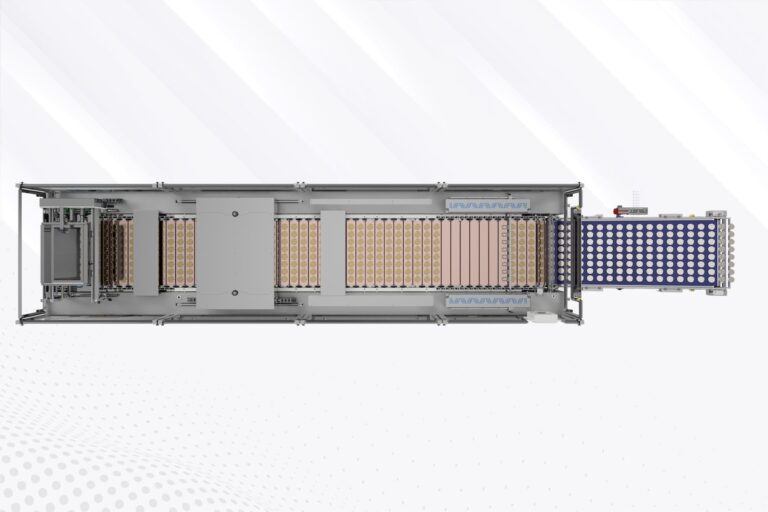
Many buyers compare a “machine” quote with a “line” quote and wonder why the second is so much higher. The line includes what comes after puffing:
- an oiling and seasoning unit for flavored cakes
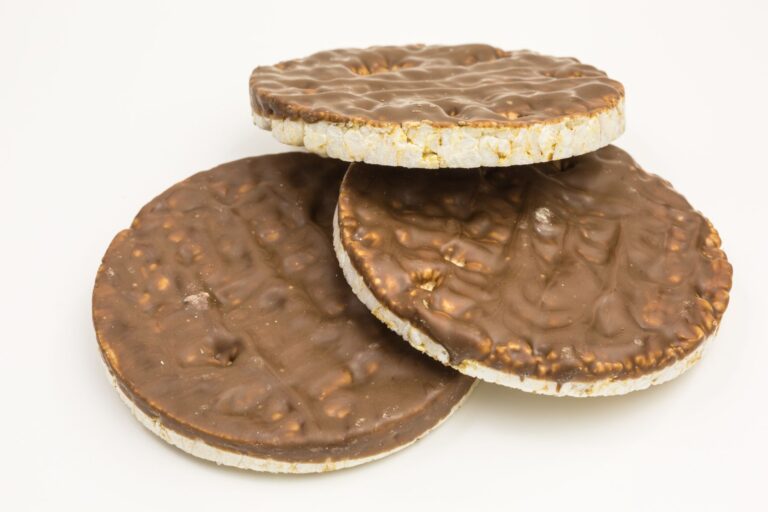
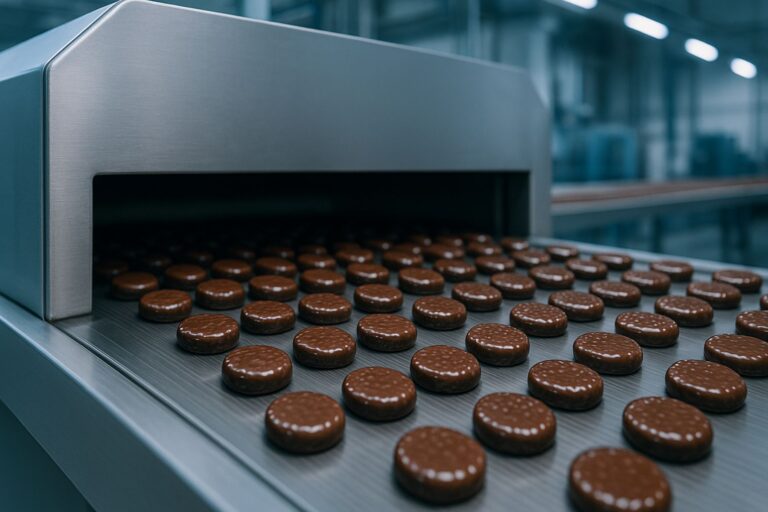
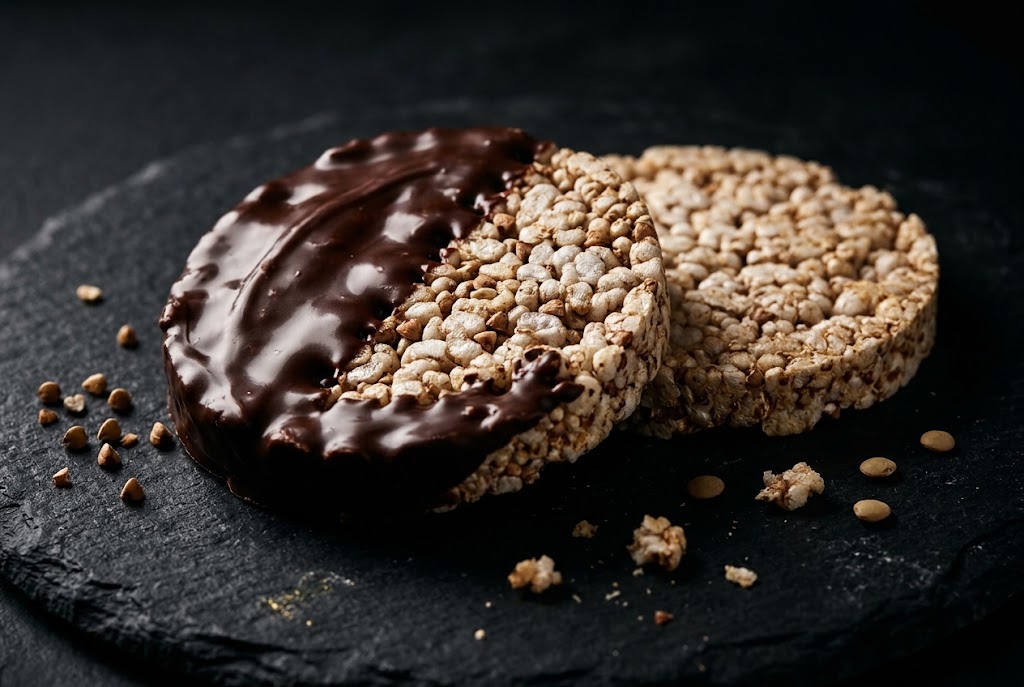
- a chocolate enrober for coated products
- a cooling tunnel so the coating sets before packing
- counting, stacking and packaging equipment
If you compare offers, make sure each one lists the same scope. A cheaper quote that stops at the puffing machine is not cheaper at all once you add the rest.
6. Hygiene design, controls and materials
Food-contact stainless steel, easy-to-open guards, wash-down friendly construction and a proper PLC with recipe memory all add cost. They also reduce cleaning time and operator errors. A machine that takes two hours to clean every shift costs you more than the price difference suggests.
7. Installation, training and logistics
The price of the equipment is only part of the project. Freight, insurance, import duties, foundations, utilities (power, compressed air, cooling water), installation, commissioning and operator training all belong in the budget. When you ask for a quote, clarify which Incoterms apply, because “EXW” and “DAP” prices cannot be compared directly.
Quick checklist for comparing quotes: same capacity, same number of formats, same downstream scope, same Incoterm, and the same commissioning and training package. If any of these differ, the numbers are not comparable.
Running costs that belong in your budget
The purchase price is a one-time number. Running costs decide whether the line stays profitable year after year, so put them next to the investment from the start.
- Grain and ingredients. This is usually the largest variable cost. Yield matters: a line that produces fewer broken or under-puffed cakes uses less grain per sellable piece.
- Energy. Heated molds consume electricity, and a well-insulated heating chamber wastes less of it. Ask how the supplier isolates the heating section and what the typical consumption per thousand cakes looks like.
- Packaging. Film, trays and cartons are often the second biggest cost per unit. Line speed and packaging format must match, or the packer becomes the bottleneck.
- Labor. Count operators per shift, plus cleaning and maintenance staff. This is where automation earns its price.
- Maintenance and spare parts. Molds and heating elements wear. Ask for a recommended spare parts list and for the lead time on the items that fail first.
When you add these to your ROI model, you will often see that a slightly more expensive machine with lower waste and lower energy use wins over five years.
Should you buy a used rice cake machine?
Used machines can look attractive, and for a first trial they are sometimes a reasonable choice. The risks are real, though. You may not know how many cycles the molds have done, the controls may be obsolete, spare parts may be hard to find, and the machine may not meet current hygiene and safety rules in your market. A CE-certified new line comes with documentation, commissioning support and a supplier who answers the phone. For a business that plans to sell to retailers or export, that support is worth a lot.
What a fair quote should include
A serious supplier will ask you questions before giving a number. Expect to be asked about:
- target output per hour and shifts per day
- grains and recipes you plan to run
- finished product format, weight and diameter
- whether you want seasoning, chocolate coating or both
- packaging format and available floor space
- your electrical supply, compressed air and water availability
If a supplier sends you a price after one email and no questions, treat it as a placeholder. A real quote reflects your product.
How to calculate rice cake machine ROI
Return on investment is simple to calculate, but only if you use honest inputs. The logic has four steps, and it is the same one we use in our CAPEX and ROI guide for industrial pancake machinery.
- Work out good output per year. Take the nominal hourly capacity, multiply by the hours you will run, then multiply by your expected efficiency (often called OEE). Efficiency below 100% accounts for changeovers, cleaning, startups and rejects.
- Work out contribution per cake. Selling price (ex-factory) minus variable cost per cake. Variable cost covers grain, packaging, energy, direct labor and any coating or seasoning.
- Multiply the two to get annual contribution.
- Divide total installed investment by annual contribution to get the payback period in years.
The table below uses illustrative inputs only. It assumes a line with a nominal 5,000 cakes per hour, 16 hours a day over 250 days (4,000 production hours per year), and a contribution of 0.015 per cake in your local currency. Replace these with your own figures.
| Line efficiency (OEE) | Good cakes per year | Annual contribution |
|---|---|---|
| 60% | 12 million | 180,000 |
| 75% | 15 million | 225,000 |
| 90% | 18 million | 270,000 |
The lesson from this table is not the absolute number. It is that efficiency moves your annual contribution by about 20% in either direction, and a well-sized, well-run line matters more than a small discount on the purchase price. Divide your quoted investment by the annual contribution to see how many years you need to recover it.
Mistakes that distort ROI
- Counting nominal capacity as real output. No line runs at its nameplate speed all day.
- Ignoring ramp-up. The first months are slower while the team learns the recipes.
- Forgetting raw material waste. Rejects and off-spec cakes cost grain and packaging.
- Leaving out working capital. Raw materials, packaging and stock all need cash.
- Assuming you will sell everything. Check that your sales plan fills the capacity you are buying.
Ways to lower risk before you commit
The most expensive mistake in this business is buying a machine that does not handle your recipe well. You can avoid it. At the B&F pilot facility, you can run your own grain, your own recipe and your own mold shape before the line is built. This kind of demo production and pre-installation program shows you real cake weight, texture and rejection rate, and it gives you better data for your ROI model than any brochure.
It also helps your team. Operators who have already run the machine start faster on site, and your own people can see whether the cake you imagined is the cake the line produces.
Get a quote built around your numbers
Send us your target capacity, recipes and packaging format, and our engineers will prepare a configuration and a quote you can use in your own ROI model. Request a quote for your rice cake line, or read more about the B&F rice cake production lines first.
Frequently asked questions
Rice Cakes & Rice cake Lines
Produce traditional or trendy rice cakes with maximum flexibility and precision. From mini bites to chocolate-coated snacks, our systems adapt to every market demand.
Contact Us Today
Discuss your project with our engineering team and discover how our machines can optimize your production.