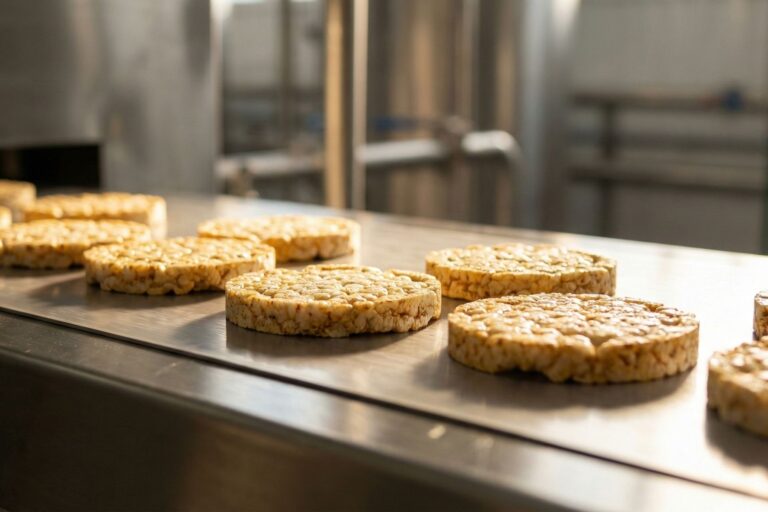
In today’s health-conscious world, consumers are seeking minimally processed, low-calorie, and gluten-free snacks. Among these, rice cakes stand out for their light texture and natural ingredients, appealing not only to dieters but to the broader market as a wholesome snack option.
While rice cakes may look simple, producing a crispy, flavorful and hygienic rice cake with a long shelf life requires careful planning an precise execuiton. Let’s take a closer look at the essential steps in professional rice cake production.
1.Selecting the Right Rice
The quality of the rice directly determines the texture and crunch of the final product. Short – or medium-grain rice varieties are most commonly used, as their higher starch content results in better puffing.
Key quality factors include:
- Moisture content between 9% and 12% for optimal expansion.
- Complete removal of foreign particals like stones, dust or husks before processing.
Choosing the rich rice variety is the foundation for creating consistent, high-quality rice cakes.
2. Choosing the Production Method
There are two primary methods for rice cake manufacturing:
- Tempering Method – The rice is moistened with steam before popping. This produces softer rice cakes, ideal for sandwich-style products or children’s snacks.
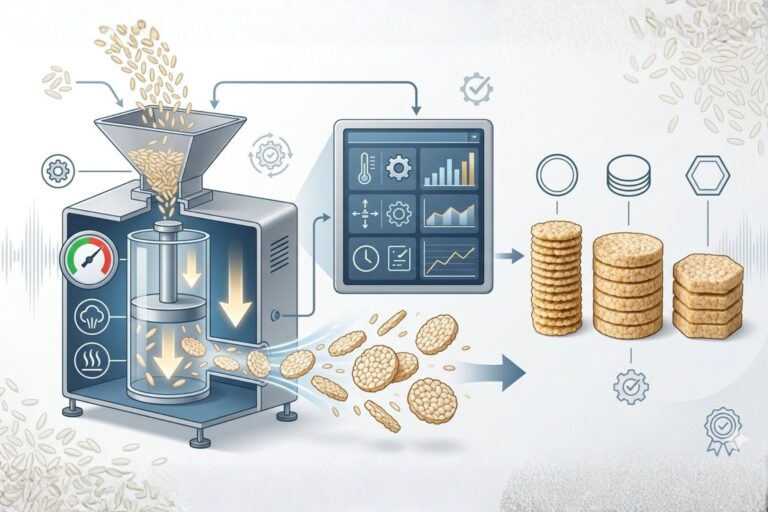
- Dry Popping Method – The rice is puffed directly using high heat and pressure. This creates a crunchier texture, shortens production time, and increases energy efficiency. It is the preferred method for snack and functional food applications.
3. Temperature and Pressure Control
Precise control over temperature and pressure is critical for a consistent puff and texture.
Typical production temperatures range from 180 °C to 300 °C
Rice grains are subjected to high pressure, then rapidly depressurized to achieve popping.
Using automated control systems ensures consistency, prevents burning and eliminates under-popped batches.
4. Molding and Shaping
Once popped the rice is formed into the desired shape using specialized molds.
Common shapes include:
- Round
- Rectangular
- Custom shapes (heart, triangle, etc) for branding or seasonal promotions.
Molds must be non-stick, food-safe and capable of distributing heat evenly. This ensures uniform shape, easy release from the mold, and a visiually appealing product.
5. Cooling and Packaging
Proper cooling is essential to maintain crunchiness. If cooling is delayed, the rice cake may absorb unwanted moisture and lose texture.
Cooling tunnels with controlled air circulation and humidity help bring products to room temperature evenly and hygienically.
Packaging should be airlight and moisture-proof to preserve freshness. Options include vacuum-sealed or modified atmosphere packaging (MAP) to extend shelf life.
6.Value-Added Variations
To stand out in the market, rice cakes can be flavore,coated or fortified:
- Coatings: Chocolate, yogurt, caramel for indulgen options.
- Nutrient boosts: Adding quinoa, buckwheat, chia seeds or protein powder.
- Seasoning: Salt, pepper, herbs or spices for savory options.
- Functional additions: Probiotics, vitamins or minerals to appeal to health-conscious consumers.
Producing premium rice cakes is a technical, multi-step process that involves selecting the right rice, choosing the ideal production method, controlling temperature and presuure, molding for precision and packaging for freshness.
Whether using the steaming method for softer textures or the dry popping method for crispier snacks, the key is precision and consistency. By mastering these steps, manufacturers can deliver rice cakes that are not only delicious but also stand out in the competitive healthy snack market.
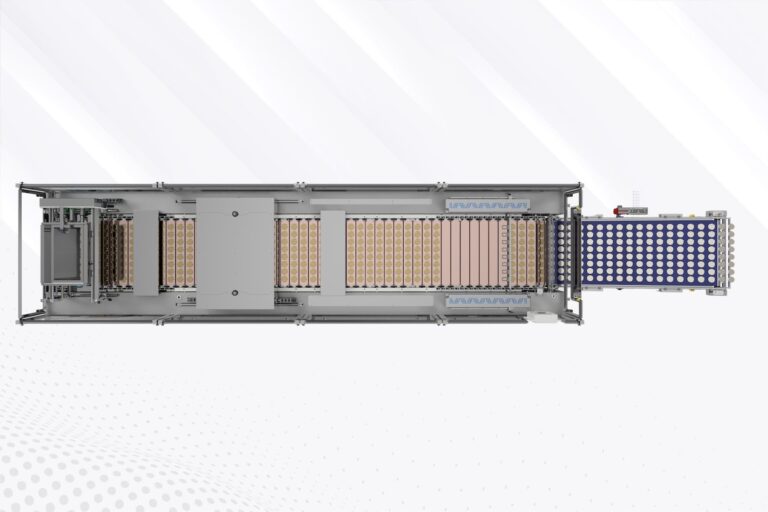
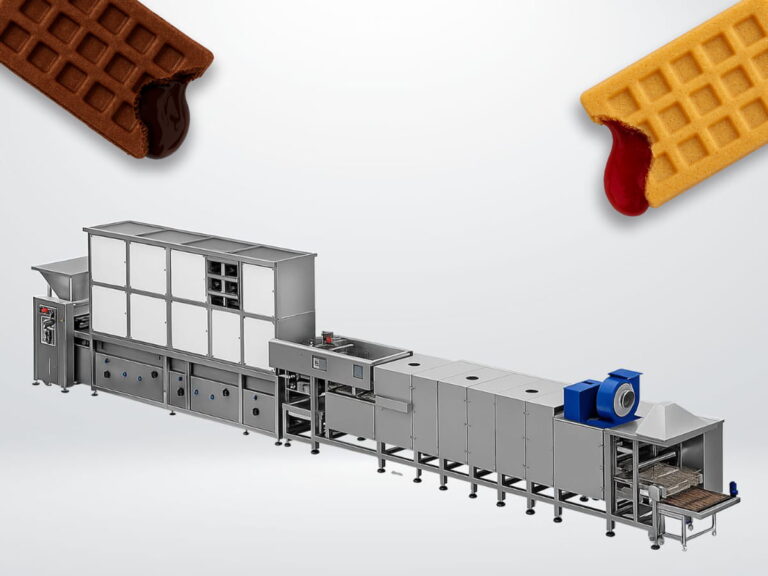
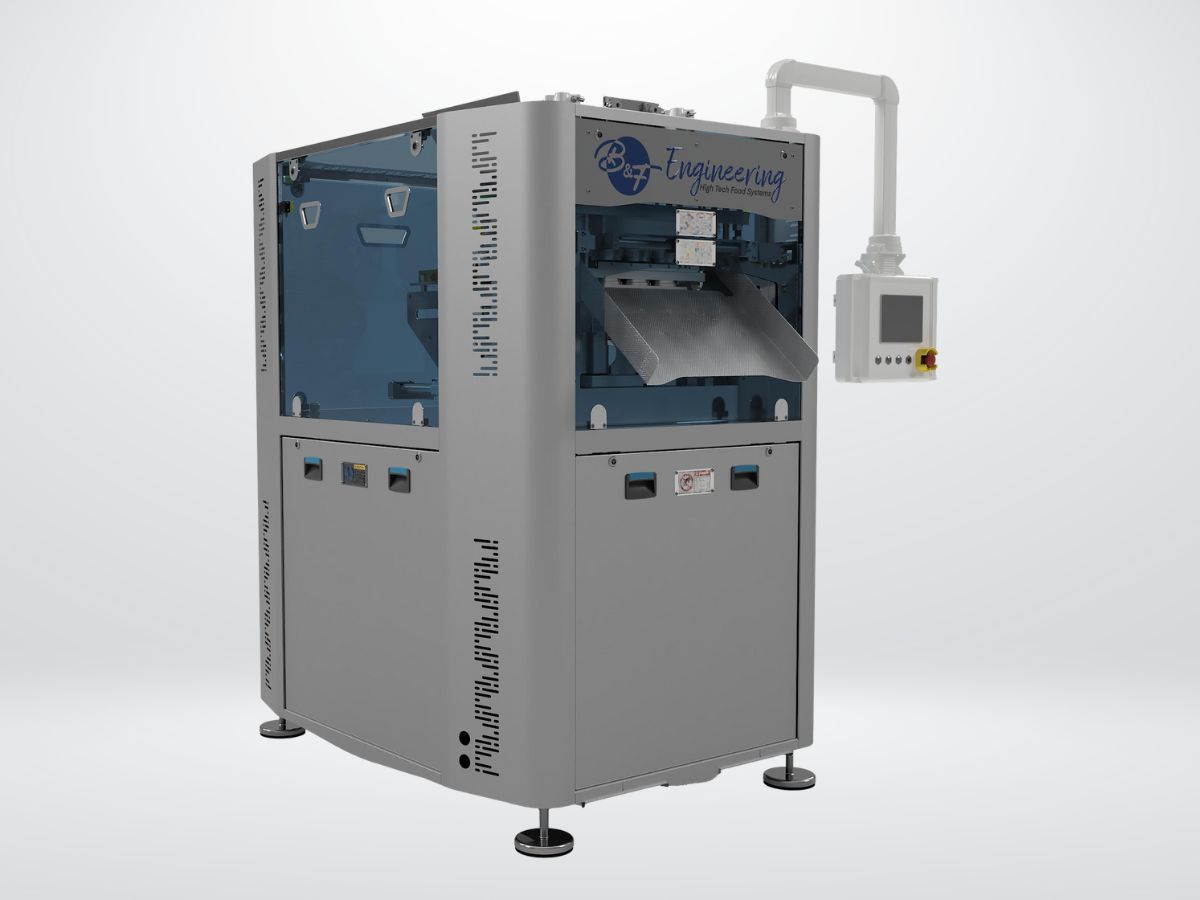
Rice Cakes & Rice cake Lines
Produce traditional or trendy rice cakes with maximum flexibility and precision. From mini bites to chocolate-coated snacks, our systems adapt to every market demand.
Contact Us Today
Discuss your project with our engineering team and discover how our machines can optimize your production.