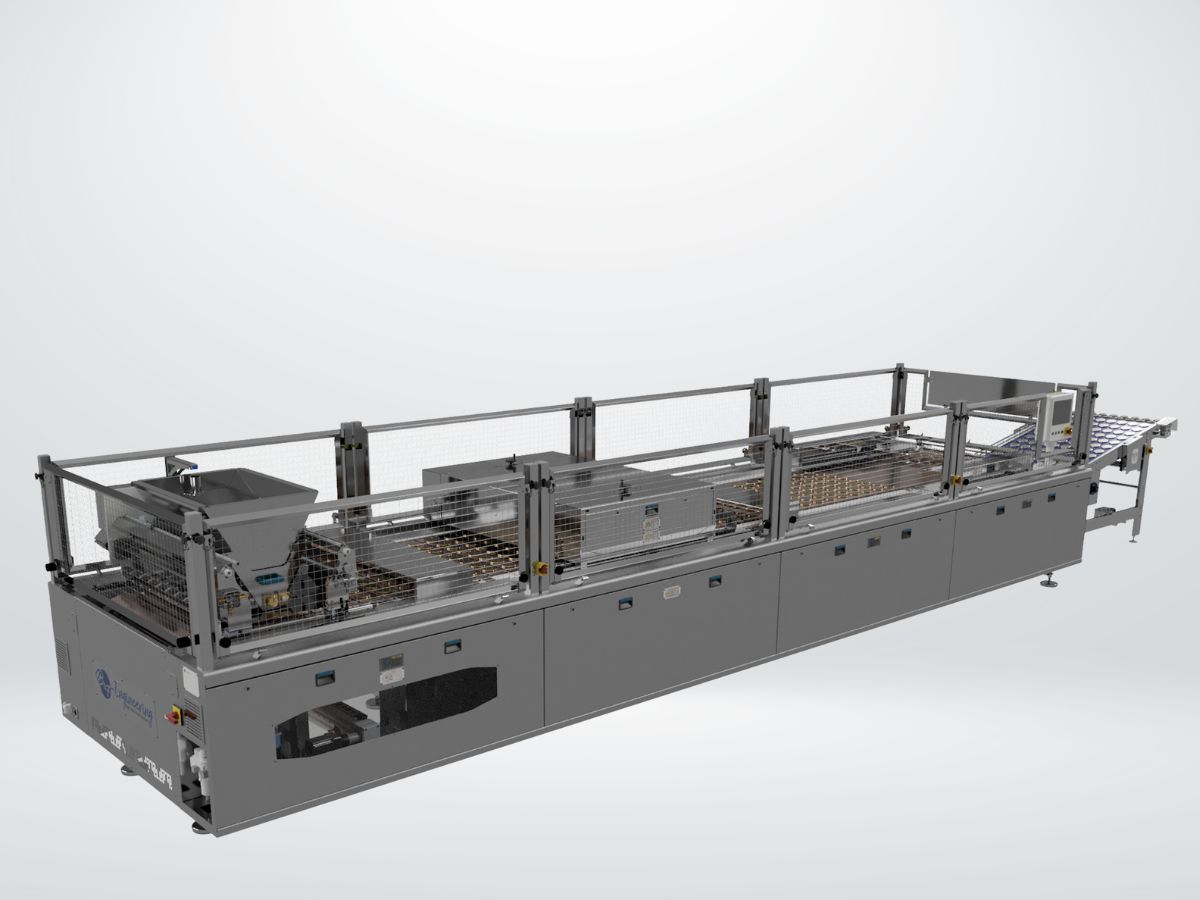
In the highly competitive commercial bakery sector, profitability is not solely determined by the volume of sales, but heavily depends on the rigorous control of operational expenses. Fluctuating raw material prices, rising energy costs, and the financial burden of high rejection rates force food manufacturers to seek highly efficient engineering solutions. Relying on outdated or semi-automatic equipment often leads to hidden losses, primarily through batter spillage, over-portioning, and severe thermal energy leakage. To combat these inefficiencies and stabilize profit margins, integrating a fully automated Pancake production line is a strategic necessity. The B&F Engineering Pancake and Sandwich Pancake Production Line is explicitly designed to address these economic challenges by merging high-precision dosing technology with advanced thermal management. This article explores how modern automation directly contributes to cost optimization, waste reduction, and energy savings in industrial pancake manufacturing.
The Financial Impact of Raw Material Waste
In industrial food production, even a minor discrepancy in batter deposition can result in massive financial losses over a fiscal year. When a semi-automatic machine dispenses just one extra gram of batter per pancake, a facility producing tens of thousands of units daily will waste hundreds of kilograms of raw ingredients—such as flour, eggs, and dairy—each month. Furthermore, inaccurate dosing leads to inconsistent product weights and sizes. Pancakes that are too large or too small fail quality control checks, resulting in product rejection. If the product is a sandwich pancake, an inaccurate filling mechanism will cause expensive ingredients like chocolate or fruit jam to leak onto the conveyor belts, resulting in both material loss and expensive production halts for cleaning. An automated Pancake production line mitigates these risks by implementing servo-driven volumetric dosing, ensuring that material waste is reduced to near absolute zero.
How the Production Line Works: An Efficiency Perspective
An industrial manufacturing line is a sequence of highly synchronized electromechanical processes, each optimized to prevent waste and save time. The operational workflow, viewed through the lens of efficiency, includes the following stages:
- Automated Batter Preparation and Feeding: Raw batter is pumped directly from the mixing vats into the machine’s holding hoppers. Integrated level sensors ensure the hoppers are never overfilled, preventing overflow and maintaining a constant head pressure for accurate dispensing.
- Precision Volumetric Dosing: Servo-driven nozzles deposit the exact required volume of batter onto the heated baking surface. By using positive displacement technology, the system guarantees that every single drop of batter is accounted for, eliminating dripping between deposits.
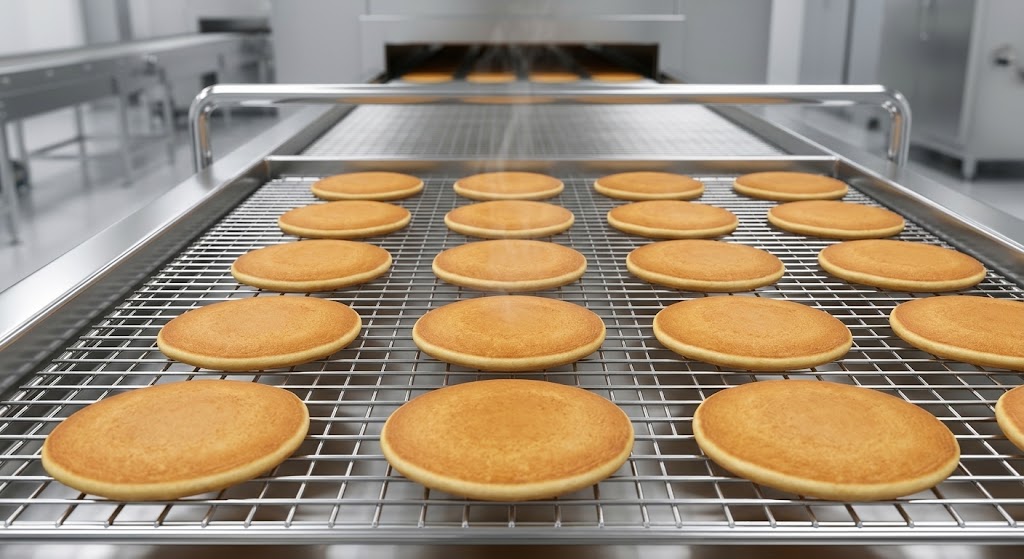
- Thermally Optimized Baking: The batter enters a continuously moving tunnel oven. The oven utilizes high-density insulation materials and precisely calibrated thermal zones, ensuring that the heat generated by the burners or electrical elements is directed entirely into the product rather than escaping into the factory environment.
- Mechanical Flipping and Recovery: Mechanical arms gently lift and flip the half-baked pancakes. The precision of these automated arms prevents the tearing or dropping of products, which is a common source of waste in manual or semi-automatic flipping operations.
- Calibrated Sandwich Filling: For sandwich products, the line uses a secondary servo-dosing unit. This unit calculates the exact viscosity of the cream or chocolate and injects a perfect, centered dose, completely preventing edge leakage and the associated material waste.
- Controlled Cooling: Finished products are transferred to a wire-mesh cooling conveyor. Proper ambient cooling prevents condensation inside the packaging, which significantly reduces the rate of mold-related product returns and extends shelf life.
Advantages in Industrial Production
Investing in a specialized Pancake and Sandwich Pancake Production Line provides measurable financial returns and long-term operational advantages:
- Yield Optimization: By strictly controlling the weight of the batter and the filling, manufacturers maximize the number of sellable units produced from a single batch of raw ingredients, drastically lowering the cost per unit.
- Energy Efficiency: Advanced PID (Proportional-Integral-Derivative) temperature controllers and highly insulated oven chambers reduce overall energy consumption by maintaining stable baking temperatures with minimal power input.
- Labor Cost Reduction: Fully automated dosing, flipping, and sandwiching mechanisms eliminate the need for manual floor operators. This transition reduces direct labor costs and minimizes human-induced errors.
- Production Continuity: High-quality industrial components ensure that the machine operates continuously across multiple shifts without the need for frequent mechanical interventions, maximizing factory uptime.
- Product Standardization: Uniform weight, size, and color mean fewer products are rejected during quality assurance, directly translating to higher net profits.
- Automated Diagnostics: PLC systems monitor motor loads, temperatures, and sensor data in real-time, alerting technicians to potential issues before they cause costly mechanical breakdowns.
What to Consider When Choosing a Production Line
To achieve true cost optimization, purchasing decisions must be based on technical specifications that guarantee long-term efficiency. Buyers should carefully evaluate the following criteria:
- Dosing Technology: Ensure the line utilizes servo-motor-driven volumetric pumps rather than basic pneumatic pistons, as servos provide superior accuracy and long-term reliability for both batter and fillings.
- Oven Insulation and Heating Elements: Investigate the thermal retention properties of the baking tunnel. High-grade insulation and efficient burner designs are critical for keeping monthly energy utility bills low.
- Control Systems Integration: The presence of an advanced, digital Human-Machine Interface (HMI) allows operators to fine-tune recipes instantly, preventing the waste associated with manual trial-and-error calibrations.
- Material Quality: The entire line should be constructed from 304 or 316-grade stainless steel to ensure a long lifecycle and prevent premature corrosion caused by industrial cleaning agents.
- Modular Expansion: A line that allows for future modular upgrades—such as adding an automated packaging feeder—prevents the need for entirely new machinery investments as the business scales.
Maintenance, Cleaning, and Hygiene
Maintenance and sanitation protocols directly impact a facility’s bottom line. Excessive downtime for cleaning represents lost revenue. The production line is engineered for rapid and efficient sanitation:
- Cleanability: The dosing units and filling nozzles are designed for quick disassembly or feature Clean-in-Place (CIP) capabilities, drastically reducing the labor hours required for daily washdowns.
- Hygiene: Smooth, crevice-free stainless steel surfaces prevent batter buildup and bacterial harboring, ensuring compliance with strict food safety audits without requiring excessive chemical use.
- Maintenance: Open-architecture frames provide technicians with immediate access to drive belts, motors, and sensors, turning complex repairs into fast, routine maintenance tasks.
- Food Safety: Utilizing certified non-stick baking plates reduces the need for constant oil spraying, saving money on release agents and preventing the buildup of carbonized residues that degrade product quality.
Pancakes & Sandwich Pancakes Production Line
Modern snack trends demand creativity, consistency, and speed—qualities that define B&F Engineering’s Pancake Production Lines. Whether you’re producing single-layer pancakes or filled sandwich pancakes (like dorayaki), our flexible systems are engineered for seamless performance. Ready to transform your production? Let’s build your custom pancake line today.
Contact Us Today
Discuss your project with our engineering team and discover how our machines can optimize your production.